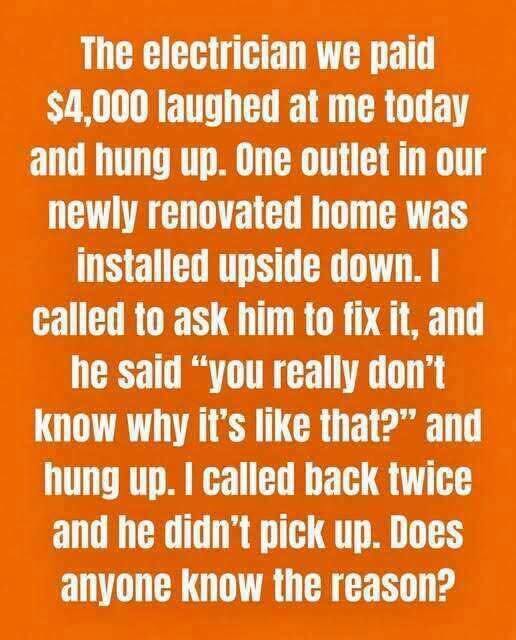
Discovering an upside-down electrical outlet can make homeowners curious about the way their electrical system works. One of the first questions people often ask is whether a nearby wall switch controls that particular receptacle. This is a reasonable question because switched outlets are common in many older properties and remain useful in modern homes. However, the orientation alone cannot provide a reliable answer. An upside-down receptacle might be connected to a switched circuit, but it could also be a standard continuously powered outlet. Similarly, an outlet installed in the conventional direction may contain a switched connection. The easiest way to investigate is to observe how the outlet responds to nearby wall switches. Before doing anything, however, homeowners should understand the difference between simple observation and electrical work. You can learn useful information without removing the cover plate, touching wiring, or opening the receptacle. If the installation appears damaged or unsafe, it is better to leave it alone and contact a professional.
A simple way to check an outlet is to use a functioning table lamp with an undamaged plug and cord. First, make sure the lamp works by testing it in another known working receptacle. Then connect it to one half of the outlet you want to investigate and turn the lamp on. Operate the wall switches in the room one at a time, observing whether the lamp turns off or on. If the lamp responds to a particular switch, you have discovered that the receptacle’s supply is controlled by that switch. If nothing happens, you can repeat the observation using the other half of the duplex receptacle. In a split installation, it is possible for one half to respond to the switch while the other remains continuously powered. This method is useful because it allows you to investigate the outlet’s behavior without making contact with electrical wiring. Nevertheless, it cannot replace a professional electrical inspection when there are questions about grounding, circuit configuration, or safety.
Understanding what happens after the switch is operated can help explain the purpose of the installation. Imagine that you plug a floor lamp into one half of a receptacle and discover that a switch near the entrance controls it. This suggests that the outlet is connected to a switched lighting arrangement. If another device is plugged into the second half and continues working when the lamp switches off, the receptacle may be configured as a split receptacle. This can be particularly convenient in bedrooms and living rooms because the homeowner can control the lighting without interrupting electricity to other equipment. It also explains why an electrician might have chosen to make the outlet look different from nearby receptacles. The reversed orientation could be an identification method intended to remind people that the outlet has a special function. However, it is still important to verify the actual arrangement rather than relying on the appearance.
Homeowners should also remember that wall switches do not always control the outlet closest to them. In some rooms, a switch may operate a ceiling light, a different receptacle, a ventilation fan, or another electrical feature. Previous renovations can also change the original wiring arrangement. A property that once depended on switched lamp outlets might have been updated with ceiling fixtures, while some of the original switched receptacles remain in place. In other cases, a homeowner may have changed the purpose of a room without modifying the electrical system. This is why the function of an unfamiliar outlet may not be immediately obvious. If you cannot determine which switch controls it, avoid repeatedly experimenting with unfamiliar electrical equipment. You can make a note of the behavior you observe and ask a qualified electrician to investigate. A professional can identify the circuit, check the wiring, and explain whether the receptacle is operating as intended.
There are several warning signs that should never be ignored during an investigation. If the outlet produces sparks during ordinary use, smells like burning plastic, makes buzzing or crackling noises, or becomes unusually hot, stop using it when it is safe to do so. Discoloration around the openings, visible cracks, loose mounting, or plugs that repeatedly fall out can also indicate a problem. A receptacle that moves when a plug is inserted may have loose mounting or other damage. These symptoms are more important than the direction of the grounding hole. Homeowners should never remove a receptacle cover or attempt to identify individual conductors without appropriate qualifications. Even when a wall switch appears to turn an outlet off, that does not mean every conductor inside the electrical box is necessarily de-energized. Electrical systems can contain multiple circuits or configurations that are not obvious from the outside. If inspection or repair is necessary, a qualified electrician should handle the work safely and according to local requirements.
Knowing how to recognize a switched outlet can make everyday life easier and help homeowners understand their property’s electrical design. It can explain why a lamp turns on from the doorway, why one half of a receptacle behaves differently from the other, and why a particular outlet may have been installed upside down. It can also prevent confusion when someone moves into an older home and discovers electrical arrangements that are unfamiliar. The best approach is to combine observation with reliable information rather than making assumptions based on appearance. A small lamp test may reveal whether a switch controls an outlet, but only proper electrical testing can establish whether the wiring is correctly configured and grounded. If the outlet behaves unexpectedly or shows signs of damage, professional assistance is the safest choice. Understanding the electrical system is useful, but protecting the people who use it must always come first.
