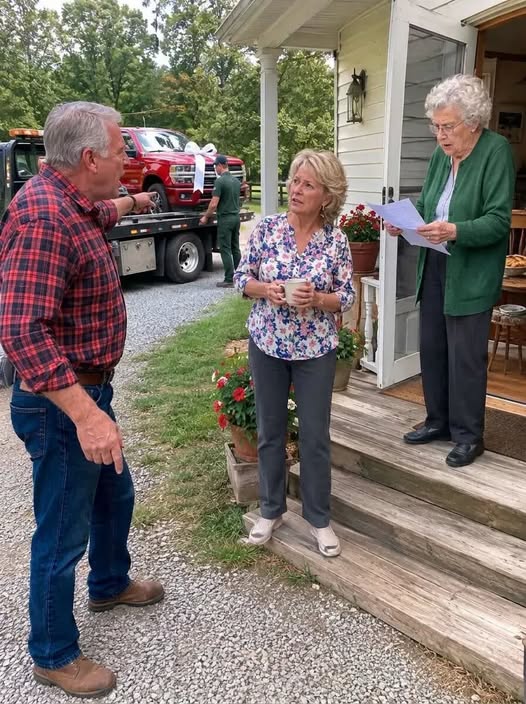
PART 5 — THE RIDE HOME
Delmas had to ride home with me in my old car. He climbed into the passenger seat and shut the door hard enough to rattle the window. I started the engine and backed out of Ethelene’s driveway. For several minutes, neither of us spoke. My hands were tight on the steering wheel, and I could feel my pulse in my fingers. I had expected to feel triumphant after the truck was taken away, but I didn’t. I felt as though I had just walked through a storm. I had spent most of my adult life trying to keep my marriage peaceful, even when that meant swallowing my own feelings. Now I had stood up to Delmas in front of his mother and a stranger. I wondered whether I had changed something that could never be put back the way it was.
Eventually, Delmas broke the silence. “You could’ve helped me out,” he said. I kept my eyes on the road. I wanted to ask why he thought I owed him that money. I wanted to ask why he had made a promise using my name. I wanted to ask whether he had ever considered that I might want to use the inheritance for something that mattered to me. Instead, I said nothing. I knew that if I started arguing, we would spend the whole drive repeating the same accusations. When we reached home, he went inside without helping me carry anything. I put my keys on the hook and went to bed. He stayed in the living room. That night, I lay awake wondering whether the marriage could survive the truth I had finally spoken.
Over the next few days, Delmas was short with me. He didn’t mention the truck, and I didn’t mention it either. We still ate supper at home. I still placed his coffee cup beside his usual spot in the morning. I still folded the laundry and put his shirts where he expected to find them. That is what life can look like after forty-four years together. You can be furious with someone and still know exactly where they keep their socks. We had shared decades of routines, celebrations, arguments, bills, and ordinary mornings. I wasn’t suddenly pretending that all of it meant nothing. But I also knew that marriage didn’t require me to surrender every decision to keep the house quiet. I could love a man and still refuse to finance a purchase he had made without my consent.
The following Saturday, I took another pan of cornbread to Ethelene’s house. She welcomed me as she always did, and the smell of supper filled the kitchen. Her old black skillet sat on the stove, and the screen door rattled whenever someone came through it. The latch had been troublesome for years. Sometimes it caught, and sometimes it swung open again unless you lifted the handle just right. While we were clearing the table, I asked whether she had ever considered replacing it. She glanced toward the door and said she kept meaning to, but never got around to it. I told her I would buy her a new storm door. She immediately said I didn’t have to do that. I replied that I knew, but I wanted to. She studied me for a moment, then nodded.
I bought the new storm door and arranged to have it installed. When I visited afterward, Ethelene pulled it shut twice, just to hear the latch catch properly. The sound was clean and firm, nothing like the old door that had rattled for years. Her face softened. “That sounds nice,” she said. I smiled and told her it did. Then she thanked me. I was glad to do it. She had stood up for me when she could have stayed silent, even though the person she was challenging was her own son. She hadn’t demanded that I give her anything in return. She had simply told the truth. I wanted to show her that I appreciated it. The door was a small gift, but it meant something to both of us. It reminded me that kindness could be offered freely, without someone assuming they were entitled to it.
