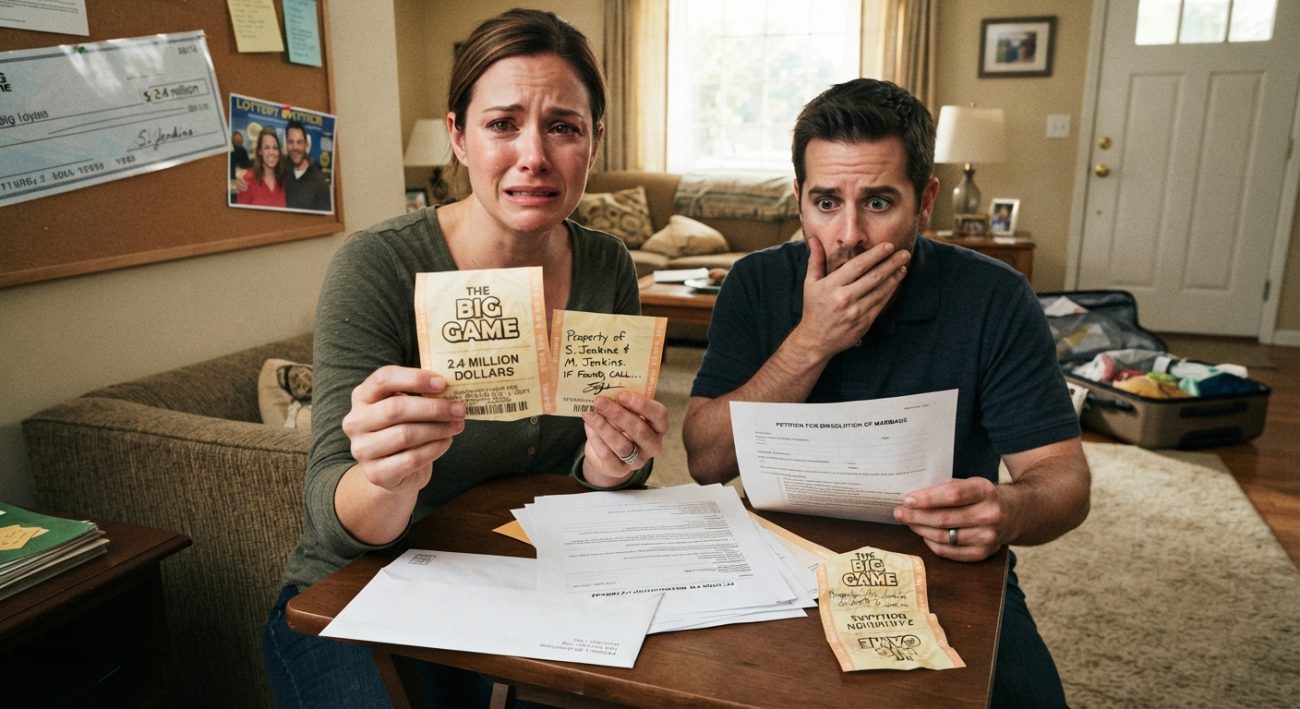
The next stage of the investigation involved reviewing the lottery claim more closely. The office had to determine whether the evidence supported my account of purchasing and possessing the winning ticket before Gary took it. My signature was one important part of that evidence, but the officials also considered the purchase history, the records I had maintained, and the information that could be obtained from the gas station. Linda remained professional throughout the process. She never promised me a particular outcome, and she reminded me that the office had to treat the dispute fairly. I respected that. I didn’t want the prize released simply because I was upset or because my story sounded more convincing. I wanted the decision to be based on verifiable information. My attorney continued communicating with the lottery office and providing the documents requested. The records were reviewed, and the ownership dispute became part of the broader legal proceedings surrounding the divorce. Gary’s position became harder to maintain as more information came to light. He continued claiming that he was entitled to the prize, but he had to answer questions about why my signature appeared on the ticket and why my records matched the purchase timeline. His explanations changed in small ways as the investigation progressed. At one point, he suggested that I might have signed the ticket after he purchased it. At another, he argued that we had shared money and therefore the ticket should be considered part of our joint property. Mr. Harris explained that these arguments would need to be assessed under the applicable rules and evidence. I didn’t need to respond to every new claim. I trusted the process to examine the facts.
The divorce proceedings also moved forward. Gary and I had to address the division of our property, the financial accounts, and the money that had been transferred into his separate account. I found it difficult to sit in meetings and hear him discuss our marriage as though it had been nothing more than a business arrangement. He spoke about what he believed he deserved and complained whenever questions were raised about the missing funds. I remembered the years when I had trusted him to handle our finances. I remembered signing documents without worrying that he might be hiding something from me. Now every statement had to be examined. Mr. Harris advised me to remain patient and let the financial investigation continue. He explained that the final settlement needed to account for the full picture, not simply the most recent dispute. The letter Gary had written before the lottery win helped establish that his plans to leave the marriage existed earlier than he had admitted. The bank records provided a timeline of transfers that needed to be considered. The evidence from the gas station helped clarify his actions after the winning numbers were announced. None of these pieces alone told the entire story, but together they created a much clearer picture of what had happened. I realized that the truth rarely appeared in one dramatic moment. Sometimes it emerged slowly, through receipts, dates, statements, and small details that someone had assumed nobody would notice.
During this period, I began rebuilding my relationship with Emily. She had not immediately known what to believe, and I didn’t blame her for that. Gary had spoken to her first, and she had been placed in an uncomfortable position. But after seeing the records, she began asking more questions. She wanted to know how long the transfers had been happening and whether I had known about the separate account. I answered honestly. I told her that I had trusted her father and had not understood what he was doing until I examined the statements. I also told her that I wasn’t going to ask her to stop loving him. She could have a relationship with her father without agreeing with his actions. I wanted her to know that she didn’t need to defend him to make me feel better. She was my daughter, not my attorney, and I didn’t want her carrying the emotional burden of the divorce. One afternoon, she hugged me before leaving and said she was sorry I had been dealing with everything alone. I told her I wasn’t alone anymore. I had my attorney, friends, and family members who had begun to understand what was happening. Most importantly, I was learning to trust myself again. For years, I had dismissed my concerns because I didn’t want to accuse Gary unfairly. Now I understood that asking questions about money and demanding honesty were not signs of being a bad wife. They were reasonable expectations in a marriage.
As the legal process continued, Gary’s attitude became more defensive. He was no longer as confident as he had been when he first took the ticket. He had expected me to give up, and he seemed frustrated that I kept producing records. He also appeared surprised that people outside the marriage were willing to examine his claims. I heard through the legal process that he had complained about the cost of the dispute and the time it was taking. I didn’t take pleasure in his frustration. I simply wanted the matter resolved properly. I had not created the conflict. I had not taken his ticket or hidden money from him. I was asking for what the evidence showed was mine and for an accurate accounting of the money that had been moved during the marriage. Mr. Harris continued to remind me not to make assumptions about the final outcome. He said the lottery claim and the divorce settlement involved related facts but were separate matters that needed to be handled according to the relevant rules. I followed his advice. I didn’t spend the money before it was awarded, and I didn’t make promises to anyone about how much I would receive. I knew that a two-million-dollar prize could attract attention and create expectations. I wanted to be careful. I also began thinking about what kind of life I wanted if the dispute was eventually resolved in my favor. I didn’t imagine expensive cars or a giant house. I wanted security, peace, and the freedom to make decisions without having to ask Gary for permission.
One evening, while looking through my old notebook, I found one of the earliest lottery entries. The handwriting was younger and more hurried than it was now, but the sentence beneath the date was exactly the same. “What is mine will never be taken from me without a fight.” I smiled when I read it. I couldn’t remember the exact day I had started writing those words, but I remembered why they mattered to me. They were a reminder that I should take responsibility for my own life and not allow anyone to dismiss what I had worked for. Over the years, the sentence had become a habit, almost a private promise. I had never expected to need it against my husband. That realization made me sad, but it also made me proud that I had kept the records. Gary had believed he could rewrite the story by taking the ticket and repeating his version loudly enough. He had forgotten that I had spent years documenting the details. I closed the notebook and placed it back in the drawer. For the first time, I wasn’t looking at it as a collection of lottery purchases. I was looking at it as proof that I had always been more careful and capable than Gary had given me credit for.
