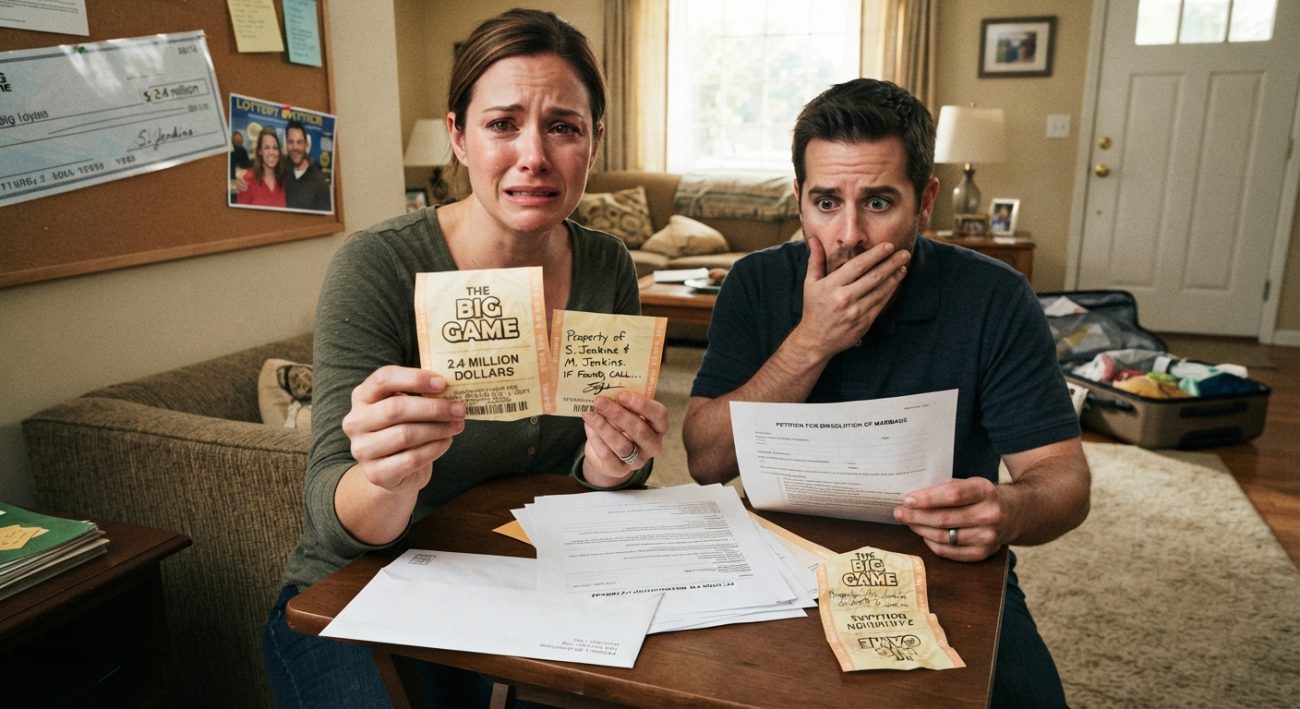
After months of legal proceedings and financial investigations, the divorce finally reached its conclusion. The settlement process required a careful review of the property and accounts, including the transfers Gary had made over the years. The financial dealings were considered as part of the overall division, and the final arrangements reflected the findings that had been established through the records. I won’t pretend that every part of the process was easy or that I received every answer I wanted. Legal proceedings rarely unfold as simply as people imagine, and there were moments when I felt overwhelmed by the amount of paperwork and the uncertainty. But I was no longer the woman who had sat at the kitchen table wondering whether her husband had taken everything from her. I had representation, evidence, and a clear understanding of what I was asking for. The lottery claim was also resolved through the proper legal process. The office considered the documentation supporting my ownership, including the signature, the purchase history, and the other information gathered during the investigation. The final determination was made according to the applicable procedures, rather than simply accepting Gary’s claim. His dishonest financial dealings were also considered during the divorce settlement. When everything was finally concluded, I felt an enormous weight lift from my shoulders. The two million dollars had been the reason the dispute became so public and intense, but the deeper issue had always been the betrayal. Gary had planned to leave me, moved money without telling me, and tried to take a prize he knew I had won. The legal process couldn’t give me back the years I had spent trusting him, but it could help me move forward with a fairer understanding of what had happened.
When the final paperwork was completed, I sat alone in my living room and read through the documents one more time. I had imagined that the day would feel dramatic, perhaps filled with tears or a sense of triumph. Instead, it was strangely quiet. There was no music, no cheering, and no grand moment when everything suddenly felt perfect. There was only the sound of the clock on the wall and the knowledge that I was finally free to make decisions about my own future. I thought about the woman I had been before the winning ticket. I had believed that marriage meant trust, and I had assumed that the person I loved would never use that trust against me. I had spent years trying to keep the peace, often ignoring the little signs that something was wrong. I couldn’t change the past, but I could decide what happened next. I didn’t want my future to be controlled by anger or revenge. I didn’t want to spend the rest of my life proving that Gary had been a dishonest husband. The legal process had addressed the matters that needed to be addressed. Now I wanted to live. I wanted to wake up without worrying about another accusation or unexpected financial discovery. I wanted to enjoy ordinary days again. I wanted to spend time with my children, take care of my home, and do things simply because they made me happy. For the first time in a long while, I could imagine a future that belonged entirely to me.
I was careful with the money. I didn’t rush out to buy a mansion or expensive cars, and I didn’t make extravagant promises to relatives. I paid my expenses, took care of the obligations that needed attention, and set aside money for the future. I also helped my family in ways that were meaningful and manageable. I wanted to be generous, but I had learned that financial decisions needed to be made thoughtfully. The prize could provide security, but it couldn’t guarantee happiness. I had seen how money could change the way people treated one another, and I didn’t want it to become the center of my relationships. I spoke with financial professionals about how to protect and invest what I had received. I made a budget and considered the long-term expenses I might face. I also made sure I understood the accounts and documents connected to my own finances. I would never again hand over complete control of my financial life simply because I trusted someone. That didn’t mean I intended to live suspiciously or assume everyone had bad intentions. It meant I had learned to be involved in decisions that affected me. I wanted to know where my money was, what agreements I was signing, and what commitments I was making. Those things were not signs of distrust. They were part of being responsible for myself. I had spent years believing that love meant sharing everything without questions. Now I understood that healthy relationships required honesty and transparency.
Slowly, my daily life began to feel normal again. I returned to gardening, something I had neglected during the worst months of the dispute. I planted flowers near the walkway and spent quiet mornings tending to the soil. I started reading books again, often sitting near the window with a cup of coffee while the afternoon light moved across the room. I visited friends and accepted invitations without feeling that I needed to explain where I was going or when I would return. I also made more time for my children. Emily and I became closer as the tension surrounding the divorce eased. We didn’t talk about Gary every time we spoke. In fact, we gradually began discussing ordinary things again: family meals, birthdays, work, and the small events that make up everyday life. I was grateful for that. I didn’t want my daughter to remember this period only as a time when her parents fought over money. I wanted her to remember that we had found a way forward. There were still difficult moments. Sometimes a familiar song reminded me of the years I had spent with Gary, and I would wonder how much of our marriage had been genuine. Other times I would find an old photograph and feel both sadness and relief. But those feelings no longer controlled my days. I had learned that healing didn’t require me to pretend I had never loved him. It required me to accept what had happened and stop allowing it to define the rest of my life.
One afternoon, Carol from the gas station called again to ask how everything had turned out. I thanked her for coming forward when she realized her information might matter. She said she had only done what she thought was right. I told her that her call had helped bring another piece of the story into the investigation. Without her, I might never have known that Gary had visited the store asking about the purchaser and the security footage. Her information hadn’t replaced the other evidence, but it had helped establish a clearer timeline of his actions. We spoke for a few minutes, then said goodbye. After hanging up, I thought about how many people had played a part in helping me regain control of my life. Linda had listened when I brought my records to the lottery office. Mr. Harris had guided me through the legal process. Carol had shared what she knew. Emily had taken the time to examine the evidence rather than accepting the first story she heard. Even my old habit of signing lottery tickets had become important in a way I could never have predicted. I was grateful for all of it. But I also knew that the most important decision had been mine: I had chosen not to give up. I had chosen to gather the records, ask for help, and insist that the truth be examined. That decision had changed the direction of my life.
