The letter explained that eight years earlier, my mother, Celia, had visited Grandma after completing her first year of recovery. I had not seen her in person for a long time, and I barely remembered the woman she had been before addiction took over her life. My childhood memories of her were fragmented. I remembered her laughing with me in the kitchen, carrying me when I was small, and singing while she prepared dinner. But those memories were mixed with confusion, broken promises, and long periods when she disappeared. By the time Grandma took me in, my mother had become so unstable that everyone agreed I needed a safer environment. Grandma never spoke badly about her, but she also refused to make excuses for what had happened. She explained that addiction was an illness, but she believed protecting me had to come first. According to the letter, my mother had arrived at Grandma’s house one afternoon and asked whether she could see me. Grandma refused. She said I was fifteen, had finally begun sleeping peacefully, and was doing well at school. She did not want to risk upsetting the stability I had worked so hard to build. My mother had reportedly stood in the kitchen crying. She understood why Grandma was protecting me, but she had hoped that completing her first year of recovery might be enough to earn a chance to speak with me. Grandma told her that recovery was a beginning, not a guarantee that everything could immediately return to normal.
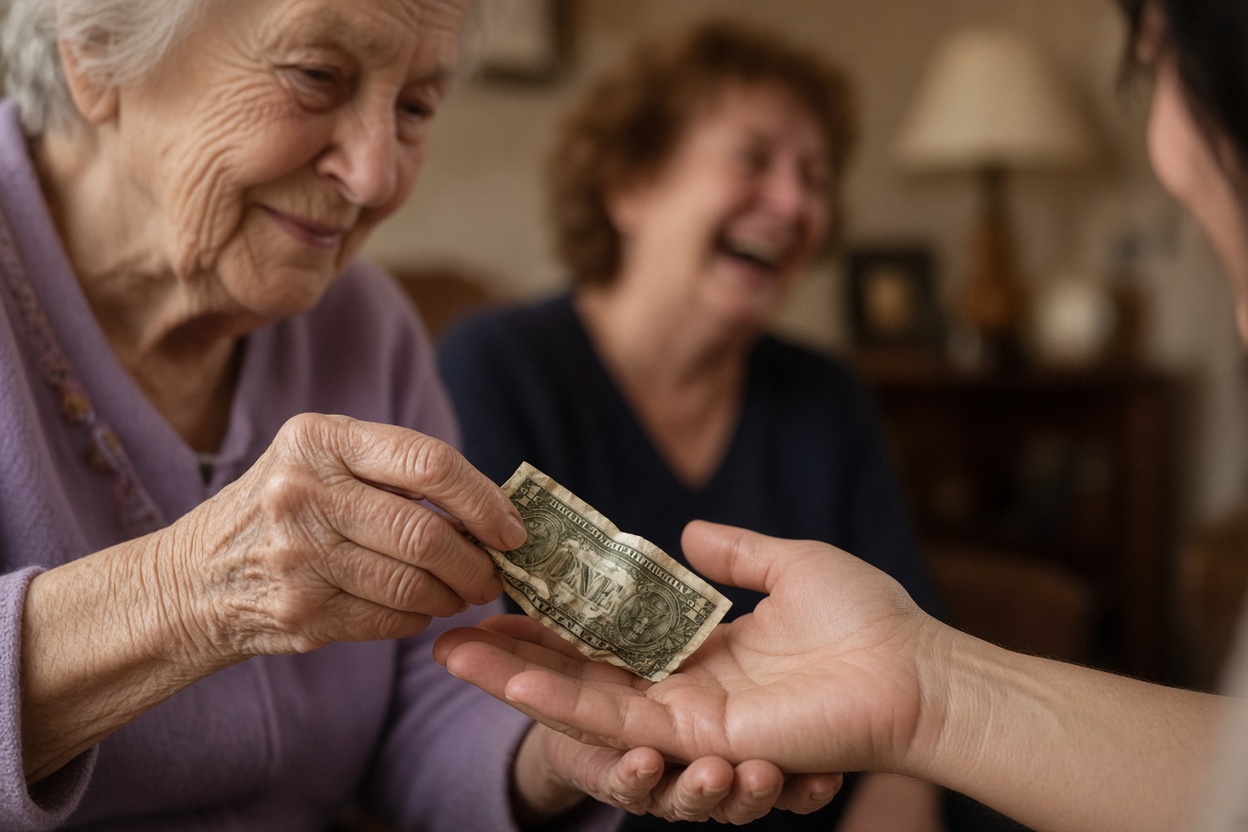
Instead of leaving forever, my mother asked whether she could contribute something toward my future. Grandma was surprised by the question. She explained that she had opened a savings account for my education and had been depositing money every week. My mother asked whether she could contribute to it too. Grandma initially hesitated. She did not want the account to become a way for my mother to pressure me into reconnecting before I was ready. She also did not want money to become a substitute for the years of absence. But my mother insisted that she was not asking to be rewarded or forgiven. She simply wanted to do something useful for the daughter she had not been able to raise. She asked whether she could make a monthly deposit and whether Grandma would allow the money to remain untouched until I graduated. Eventually, Grandma agreed. The following month, a deposit of one hundred dollars appeared in the account. The letter explained that my mother had continued making the same payment every month for eight years without missing one. I stared at the page, unable to understand how she could have been part of my life for so long without me knowing. The money represented more than financial support. It meant that while I was growing up believing my mother had disappeared completely, she had been quietly doing something to help prepare for my future.
Grandma’s letter continued by explaining that my mother had remained in recovery. She had found an apartment, obtained steady employment, and gradually rebuilt her life. She worked as a shift supervisor at a grocery store, often taking extra hours when someone called in sick. She had also begun helping other women who were struggling with addiction. By the time I graduated, she had sponsored three women in recovery, helping them attend meetings, find resources, and remain connected to support systems. Grandma wrote that my mother had been clean for nine years. Every Sunday, she called to ask about me. Sometimes the calls lasted only a few minutes. Other times, they lasted nearly an hour. Grandma told her about my school achievements, the first dance I attended, my college acceptance, and the teaching program I had chosen. She also sent photographs whenever she could. My mother knew when I received good grades, when I started working part-time, and when I moved into my college apartment. She knew about the friends I had made and the challenges I had faced. But she never asked Grandma to tell me that she was calling. She believed I deserved to grow up without feeling watched or pressured by someone whose past behavior had hurt me. I found myself imagining her sitting alone in her apartment every Sunday, waiting for a phone call with Grandma just to hear how I was doing.
Then I reached the sentence that broke me. My mother had attended my graduation ceremony. She had sat in the very back row, wearing a gray sweater, and left before the crowd so I would not notice her. I read the sentence again, then covered my mouth. I remembered looking toward the back of the auditorium before the ceremony began. There had been so many people that I could barely see individual faces. I remembered the applause, the speeches, and the moment I walked across the stage to receive my diploma. I had searched for Grandma’s face and found her smiling proudly near the front. I had no idea that my mother had been sitting somewhere behind her. I wondered whether she had cried when my name was announced. I wondered whether she had wanted to stand up, call out, or walk toward me afterward. Grandma’s letter explained that my mother had left before the crowd because she did not want to interrupt the celebration or make me feel obligated to acknowledge her. She had told Grandma that seeing me graduate was enough for that day. She wanted to know that I had reached the milestone she had been helping prepare for, even if she could not stand beside me. The thought of her sitting alone in the back row, watching the daughter she had not raised walk across the stage, made my chest ache. I had spent years wondering whether she ever thought about me. Now I knew that she had been thinking about me every single week.
The second page of the letter contained my mother’s phone number. I sat in Mr. Halloway’s office for nearly an hour, holding the paper and staring at the digits. I could not decide whether to call immediately or wait until I had spoken to Grandma. Part of me felt angry. I wondered why my mother had not found another way to contact me. Why had she allowed me to believe she had forgotten about me? Why had she not tried to explain her recovery or ask whether I was ready to talk? But another part of me understood that she might have been terrified of making things worse. I remembered how difficult my teenage years had been and how hard Grandma had worked to make me feel safe. Perhaps my mother had believed that staying away was the only way to protect the progress I had made. Still, the choice had left me with questions that had never been answered. Mr. Halloway did not rush me. He simply said that Grandma had trusted me to decide what happened next. The account was mine, and so was the decision about whether to reconnect with my mother. I thanked him, placed the passbook and letter inside my bag, and walked out of the bank. On the bus ride home, I kept touching the envelope through the fabric of my bag, as though it might disappear if I stopped checking. That evening, I finally took out my phone and dialed the number.
