Part 6 — Learning to Be Together Differently
The months after the diagnosis were not easy, but they were more honest. Brad’s workplace arranged a meeting to discuss his responsibilities. He wanted to continue working, and his employer agreed to adjust some duties while the medical assessment continued. He began using a digital calendar with reminders and a simple notebook for tasks. Melissa helped him organise meetings and written instructions. At first, he hated the extra structure. He said it made him feel like a schoolboy. But he gradually discovered that it reduced the pressure of trying to remember everything. When he forgot a meeting, the reminder helped. When he lost track of a conversation, he could check his notes. We also agreed that he would no longer drive until the formal assessment had been completed. I took over the driving, which meant we had to plan our days differently. Brad complained about my habit of taking the scenic route, but I reminded him that he had spent thirty years criticising my parking. Some things, thankfully, had not changed.
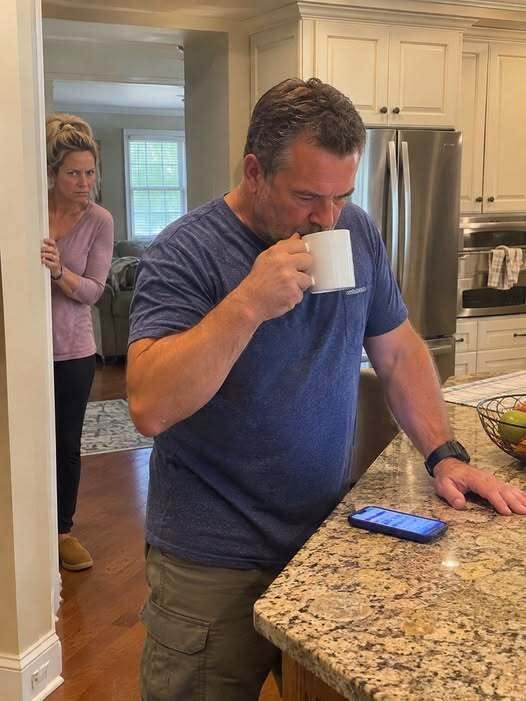
At home, I learned to distinguish between helping and taking over. It was tempting to answer every question for Brad or finish every task when he hesitated. Sometimes that was necessary, but often it only made him feel less capable. I began giving him more time. If he couldn’t remember a word, I waited. If he forgot where he had placed something, we searched together rather than treating it as a crisis. We labelled a few cupboards and kept important items in consistent places. We placed a calendar near the telephone and wrote down appointments immediately. I made sure the stove and household appliances were safe and discussed practical changes with our doctor. None of these adjustments solved the illness, but they made ordinary life less stressful. The hardest part was accepting that our routines would need to change. I had spent eleven years pouring Brad’s coffee into the BEST HUSBAND mug. Now I also placed his morning medication beside it, checked the day’s schedule, and made sure he had eaten breakfast before we went out.
One afternoon, we visited the coast. It had been on our list for years, but work, family obligations, and ordinary excuses had always pushed it aside. We rented a small room overlooking the water and walked along the promenade. Brad was tired by the time we reached the pier, so we sat on a bench and watched the waves. He asked whether we had been there before. I told him we had visited once when Lauren was little. He smiled and said he remembered the ice cream shop, though he couldn’t recall the name of the town. I showed him an old photograph on my phone. In it, he was holding our daughter, both of them laughing as the wind blew their hair. He studied it carefully. “I was a good-looking fellow,” he said. I laughed. “You were very pleased with yourself.” He looked at me and asked whether I still thought so. I told him that I had always preferred his smile to his hair. He leaned over and kissed my forehead. For a few minutes, we were simply two people watching the sea.
The family photograph happened in the garden on a bright Sunday afternoon. Lauren brought the children, and Brad’s brother joined us by video call because he couldn’t travel. We set up the camera on a tripod, but the grandchildren kept moving before the timer went off. One pulled a face, another sneezed, and the youngest insisted that the dog had to be included. Brad laughed so hard that he had to sit down. Eventually, we got a picture in which everyone was looking roughly in the same direction. Afterward, Brad asked me to print several copies. He wanted one for the hallway, one for his bedside table, and one for his brother. I realised that he was beginning to think about preserving memories in a different way. He did not want every moment to become a medical exercise. He wanted to enjoy the time we had and keep the moments that mattered. I agreed. We made an album together, adding dates and short descriptions beneath the photographs. When he could remember a detail, he wrote it himself. When he couldn’t, I helped.
There were difficult days, too. Brad sometimes became frustrated when he repeated a question or misplaced something important. Once, he became convinced that I had moved his wallet, even though he had put it in the refrigerator while carrying groceries. When I found it, he was embarrassed and angry. I reminded him that we had agreed not to blame each other for mistakes. He apologised, then asked whether I was tired of him. I told him that I was tired sometimes, but not of him. I was tired of the appointments, the worry, and the constant need to plan ahead. I needed rest and support just as he needed patience. We arranged for Lauren to spend one afternoon each week with him so I could see friends, shop, or simply be alone. I also joined a local support group for partners of people with memory disorders. Listening to others helped me understand that loving someone through an illness did not mean pretending it was easy. I could be devoted to Brad and still need a life of my own.
