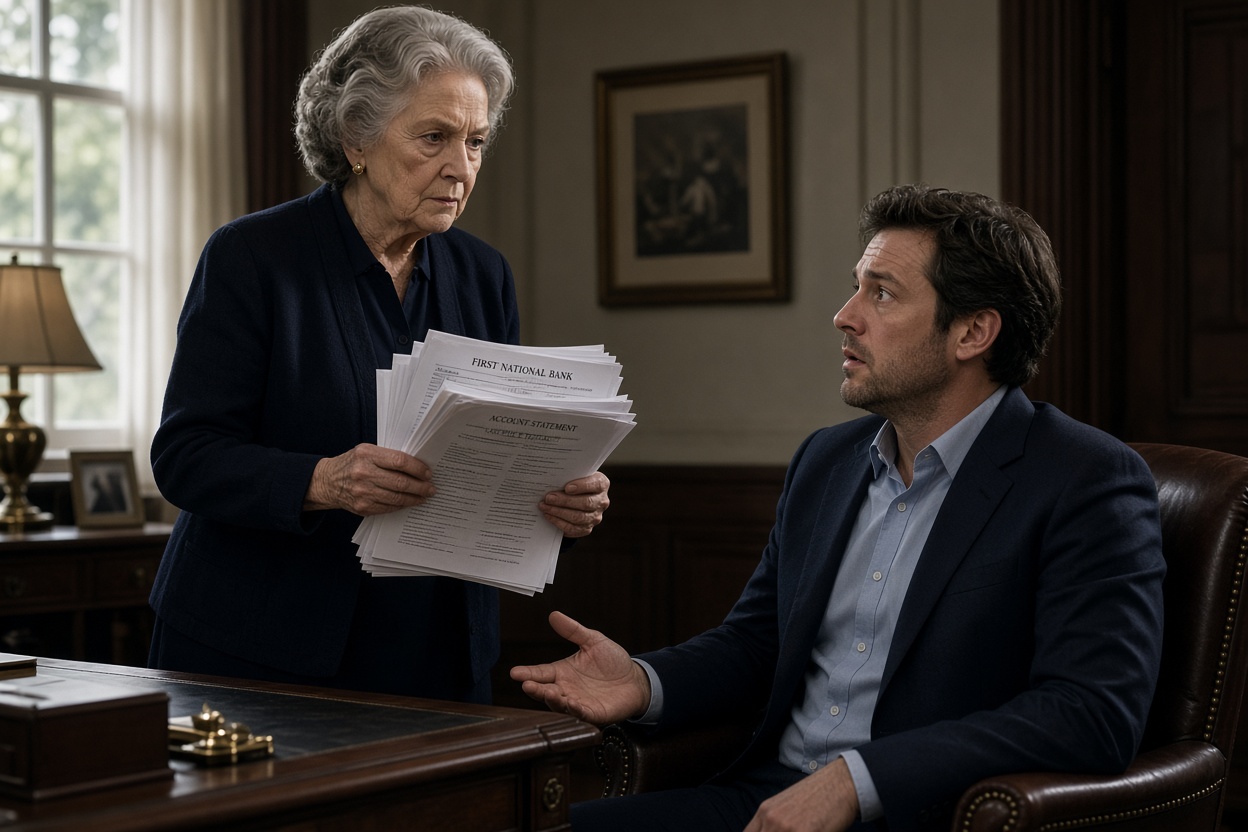
I did not speak with either of them directly. Emily, however, continued sending messages. Some were apologies, others were explanations, and a few were simply photographs of things that reminded her of childhood. I did not block her, but I did not rush to respond. Eventually, I agreed to meet her in a public café, with the understanding that we would not discuss the legal details. When she arrived, she looked older than she had a month earlier. She sat across from me and began crying before she had even ordered her coffee. She said she knew she had failed me and that she had allowed fear to make her choices. I told her that fear might explain why she had stayed silent, but it did not excuse helping Brian access my private information. She nodded and said she understood. I asked her whether she had ever considered what would have happened if the bank had not noticed the withdrawals or if the false credit application had been approved. She admitted that she had not thought beyond Brian’s promises. I told her that was part of the problem. She had focused on protecting her marriage and had forgotten that her mother was a person with a life, needs, and rights of her own. We did not solve everything that afternoon, but we spoke honestly for the first time since the discovery.
When the investigation moved forward, I gave my final statement and confirmed the details of the missing documents, the stolen coat, and Walter’s ring. I explained that I had never authorized Diane or Brian to access my accounts, and I had never given Emily permission to share my identification information. I also provided copies of every message I had received. The authorities handled the next steps according to the evidence. I understood that the process might take time, and I did not expect the legal system to repair my family. That was something we would have to face separately. The bank eventually agreed to restore the fraudulent withdrawals after completing its review and coordinating with the relevant authorities. Seeing the sixty-one thousand dollars returned to my account was a relief I cannot fully describe.
I did not celebrate or spend the money. I simply looked at the balance and thought about Walter. The money had returned, but the months of worry had taken something from me that no account statement could replace. I had lost the easy trust I once felt when Emily walked through my front door. I had lost the belief that people who shared my family name would never use my kindness against me. I also learned that being eighty years old did not mean I was powerless. I could ask questions, challenge decisions, seek legal help, and insist on being treated with respect. I made arrangements with my lawyer to update my estate documents and remove unnecessary access to my financial information. I also contacted the bank to establish additional security measures. No one would be able to make changes to my accounts without direct confirmation from me. I placed the new documents in a locked cabinet and kept the key somewhere only I could find it. For the first time in years, I reviewed every part of my financial life rather than assuming everything was safe simply because it had always been safe before.
I also made changes to the house. The new locks stayed, and I installed a small security system with cameras facing the front door, back entrance, and driveway. Mrs. Lawson helped me choose a company and stayed with me while the equipment was installed. I gave her a spare emergency contact number, but I did not give anyone another house key. I moved my important documents into a locked safe and created a written list of accounts, insurance policies, and emergency contacts. I arranged for a trusted professional to review my financial statements regularly. These steps did not mean I intended to live in fear. They meant I had learned that independence required preparation. As for Emily, our relationship remained uncertain.
She began seeing a counselor and eventually moved into a separate apartment while she decided what to do about her marriage. She told me that she wanted to rebuild our relationship, but I made it clear that trust would not return simply because she was sorry. I needed honesty, consistency, and time. She visited occasionally, always calling before she came. At first, our conversations were awkward. We spoke about ordinary things, the weather, the garden, and the neighbors. Slowly, she began to understand that I was not going to pretend the theft had never happened. One afternoon, she asked whether she could see the wedding ring. I took it from the velvet box and placed it on the table between us.
