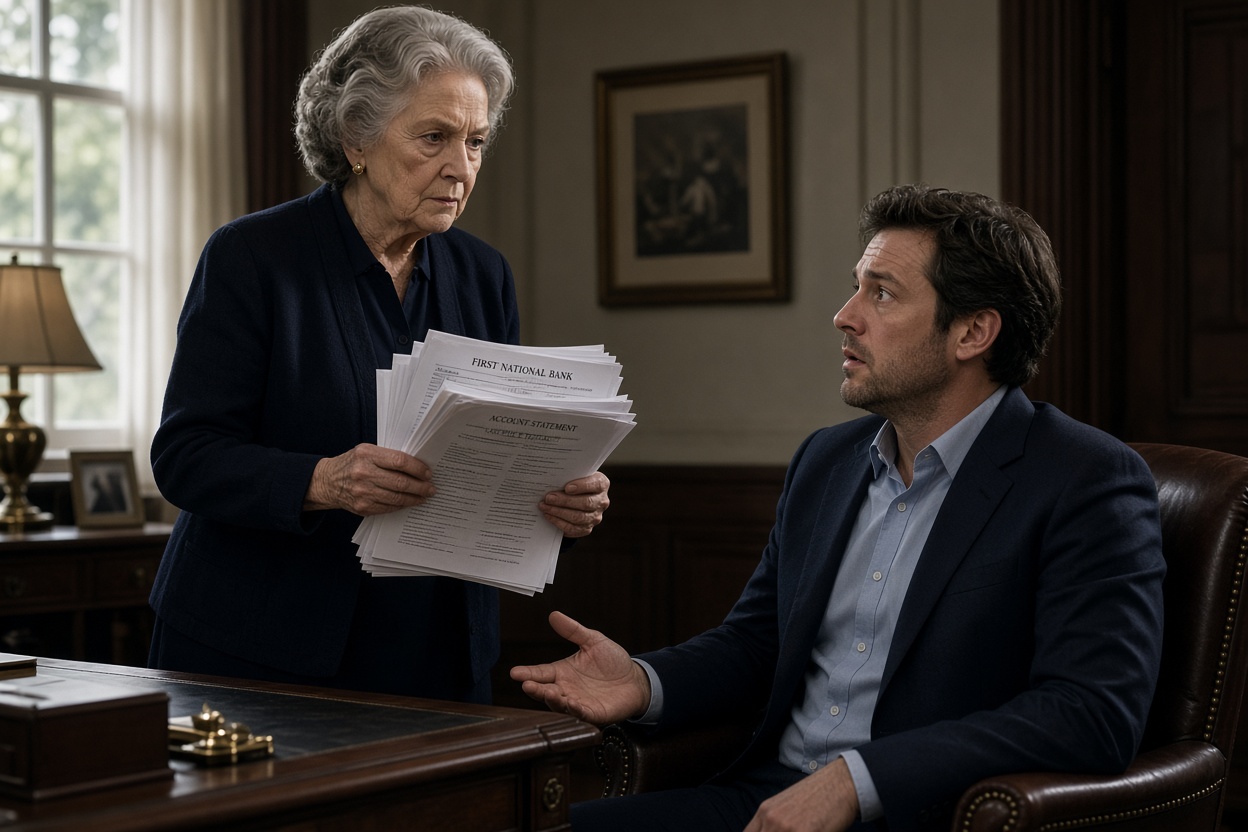
The bank’s fraud department also contacted me with an update. They had completed an initial review and were working with the police to determine how the withdrawals had been authorized. The representative explained that the bank had procedures designed to verify identity, but the investigation was examining whether those procedures had been properly followed in my case. I asked whether the bank would reimburse the missing money. She said no final decision had been made and that I would receive a formal response after the review. I wrote down her name, the date, and the reference number. I had learned not to rely on verbal promises.
Every conversation needed to be documented. I also contacted a lawyer recommended by Mrs. Lawson’s nephew. During our first meeting, the lawyer explained that I should keep copies of all financial records, police communications, letters, and messages. He said I might have several options depending on the outcome of the bank review and the criminal investigation. I asked whether I should sign any repayment agreement Brian offered. He strongly advised me not to sign anything without legal review. He also told me not to accept cash privately or withdraw my complaint simply because a family member promised to make things right. I left the office feeling more prepared. For years, Walter had handled many of the complicated financial matters, and I had trusted him to explain everything. After his death, I had continued managing our accounts, but I had rarely needed to deal with a situation like this. Now I was learning to ask questions, keep records, and insist on written answers. It was exhausting, but I was beginning to feel less helpless. [nextpage]
PART 7
Several weeks passed before the investigation reached its next major stage. During that time, I received updates from Detective Harris, the bank, and my lawyer. The money was still being traced, and the authorities were preparing the documentation needed to move forward. I learned that Brian had used most of the stolen funds to cover business debts and personal obligations. He had not kept the money in one place, which made recovery more complicated. However, investigators had identified transactions and accounts connected to the withdrawals, and my lawyer was helping me understand the options available for recovering the loss. The bank eventually completed its review and confirmed that the transactions were fraudulent. Its decision about reimbursement was still subject to the final documentation, but the bank had acknowledged that I had not authorized the withdrawals. I felt a small sense of relief when I received that letter.
It did not erase the weeks of fear or the damage to my family, but it meant that the evidence was being taken seriously. Detective Harris also confirmed that Walter’s ring had been formally identified and would be released to me when the evidence process allowed it. I visited the station and signed the necessary paperwork. When the officer handed me the small box, I opened it carefully. There it was, exactly as I remembered it. The tiny scratch near the setting was still visible. I held the ring in my palm and cried. It was not simply a piece of gold. It was a reminder of the man who had worked beside me, raised a daughter with me, and built a life from almost nothing. I had feared that the ring would disappear forever, but somehow it had come back. I placed it in a small velvet box and promised myself that I would never again leave something so meaningful where another person could easily take it.
Brian eventually contacted me through my lawyer, asking whether I would consider accepting a repayment arrangement. He offered to return the money in monthly installments and said he was willing to put the agreement in writing. My lawyer reviewed the proposal and explained that accepting repayment would not necessarily require me to withdraw the police report. I told him I wanted the money returned, but I did not want a private agreement to interfere with the investigation. We made it clear that any repayment would be documented and that I would not sign away my rights without understanding the consequences. Brian’s business had suffered badly, and he was no longer able to pretend that the theft had been a harmless temporary loan. Diane also faced questions about her role in the withdrawals and the missing ring.
