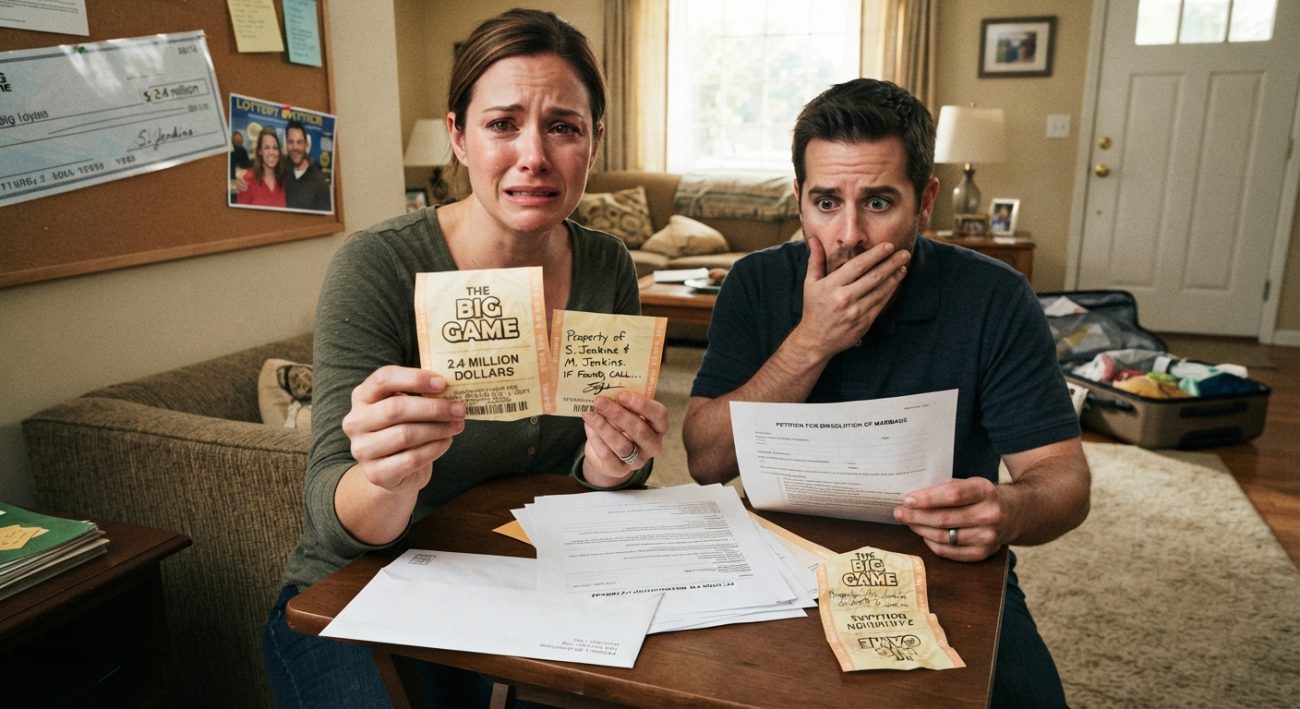
Mr. Harris examined the letter carefully when I brought it to his office. He asked whether I recognized the handwriting and whether I knew when Gary had written it. I told him that the handwriting was unmistakably his and that the letter referred to events that had happened several months before the lottery win. He explained that the document could be relevant to understanding Gary’s intentions and the timeline of the divorce, although its legal significance would depend on how it was authenticated and considered alongside the other evidence. He also reminded me not to alter the letter or write anything on the original. We made copies, documented where I had found it, and added it to the growing collection of records. I asked whether the financial transfers and the letter could affect the divorce settlement. He said they could be important, particularly if the investigation established that marital funds had been moved or concealed. But he cautioned me that the outcome would depend on the applicable law, the source of the money, the timing of the transfers, and the evidence available. I appreciated that he didn’t exaggerate the situation. I was angry, but I needed to remain focused. Gary had spent years moving money without telling me, and now I needed to establish exactly what had happened. Mr. Harris arranged for the financial records to be reviewed and advised me to preserve every communication related to the lottery ticket. He also suggested that I create a detailed timeline beginning with the purchase of the winning ticket and continuing through Gary’s decision to file for divorce. I went home and began writing everything down. The more organized my records became, the less overwhelming the situation felt. I was no longer relying on memory alone. I had dates, statements, receipts, and documents that could be examined.
For a while, the investigation moved slowly. The lottery office continued reviewing the competing ownership claims, and the financial investigation required time. Gary’s attorney challenged my account and argued that the ticket should be considered his property. Gary continued insisting that he had purchased it, even though my records showed a consistent history of buying and signing tickets. He also tried to portray me as a bitter wife who was using the lottery dispute to gain an advantage in the divorce. I expected him to fight, but I was still surprised by how confidently he repeated statements that I knew were false. He had once been the person I trusted most. Now every conversation seemed designed to confuse the facts or make me doubt what I had experienced. I stopped speaking to him directly about the money and allowed Mr. Harris to handle the legal communication. It was difficult at first. I was used to solving problems by talking things through, and part of me still wanted Gary to admit what he had done. But I began to understand that an honest conversation was unlikely to happen simply because I asked for one. He had already chosen his position. My responsibility was to protect my interests and let the evidence speak. I kept copies of every letter, email, and document I received. I also continued reviewing the financial records, marking transactions that needed further explanation. There were still unanswered questions, but I was determined to find the truth.
Then Carol, an employee at the gas station where I had purchased the winning ticket, called me. I recognized her voice immediately. I had been a regular customer there for years, and we had spoken often during my visits. She told me that she had heard about the dispute and wanted to share something she believed might be important. I asked her what had happened. Carol explained that Gary had visited the store after the winning numbers were announced. He had asked whether anyone could identify the person who purchased the winning ticket. He also wanted to know whether the store had security footage that might show who had bought it. At first, Carol hadn’t thought much of the questions. People sometimes asked about lottery purchases, especially after a large prize was announced. But Gary’s behavior had seemed unusual. He was interested in finding out what the cameras showed and whether anyone could confirm the identity of the purchaser. Carol said she remembered him because he had returned more than once, asking similar questions. When she later learned that I was disputing his claim, she realized the information might matter. I listened carefully, asking her to explain the dates and exactly what Gary had said. I didn’t want to put words in her mouth or encourage her to make assumptions. I simply wanted the facts as she remembered them. When we finished talking, I thanked her and immediately contacted Mr. Harris. He told me that Carol’s account could be relevant, but it needed to be documented properly. He recommended that she provide a factual statement in her own words and preserve any information she had about the visits. If the store still had relevant records or footage, the appropriate legal process could be used to request them.
Carol’s revelation affected me more than I expected. Until then, Gary had been claiming that the ticket belonged to him, but he had offered explanations that made it sound like a misunderstanding. He had suggested that perhaps we had both believed we purchased it. He had said the ticket might have been placed in the wrong pile or that I was confused about the day. But his visit to the gas station suggested that he had been trying to find out what evidence existed before anyone could challenge his story. He had not simply taken the ticket and assumed nobody would notice. He had apparently been checking whether the store could identify the purchaser and whether the cameras might expose what he had done. I thought about the nineteen years of signatures and dates in my notebook. I wondered whether he had ever noticed how carefully I documented the tickets. Perhaps he had assumed I would not keep the records or that I would eventually give up. Maybe he believed that the money would make it impossible for me to fight him. Whatever he had thought, Carol’s information gave the investigation another important lead. I passed her contact details to Mr. Harris and wrote down everything she had told me while the conversation was still fresh in my memory. I didn’t call Gary to accuse him. I didn’t send him an angry message or demand an explanation. I had learned that the best way to protect myself was to avoid giving him opportunities to change his story or destroy information. Instead, I let the attorney handle the next steps.
A few days later, Emily called. Her voice was tense, and before I could even ask how she was doing, she told me that her father had contacted her. Gary had accused me of stealing his lottery winnings and claimed that I was trying to destroy his life. Emily said he had told her that I was making false allegations and using the divorce to take money from him. I felt a familiar sadness rise inside me. For years, I had tried to protect Emily from the disagreements between Gary and me. I had avoided speaking badly about her father, even when I was hurt by his actions. I wanted her to have a relationship with both parents without feeling that she had to choose sides. But now Gary was using that relationship to pressure her into believing his version of events. Emily asked me directly whether it was true that I had taken the ticket. I could hear the uncertainty in her voice, and I knew that this conversation would matter long after the lottery dispute was resolved. I didn’t want to answer with anger. I wanted her to understand that the truth was supported by evidence, not simply by my feelings. So I told her I had purchased the ticket, signed it, dated it, and kept records of my purchases for nineteen years. I explained that the lottery office had reviewed my evidence and temporarily suspended payment while the ownership dispute was investigated. I also told her that my attorney was reviewing financial records and that I had discovered transfers I had never known about. I didn’t share every private detail, but I stopped hiding the seriousness of what her father had done.
