PART 6 — THE TRUTH BEHIND THE WEDDING
Grant began telling me everything. He said Vanessa had gradually taken control of his phone and their schedule. At first, it seemed harmless. She would answer a call if he was driving, or remind him that he had promised to spend an evening with her family. Then she began deciding which messages needed a reply and which ones could wait. She told him that some people were too demanding and that he needed to protect their relationship. Grant admitted that he had given her his passcode because he believed couples should trust each other. He never imagined she would use it to block his mother. When I asked whether he had noticed my calls disappearing, he said he had assumed I was busy. He hadn’t checked. He hadn’t asked. He had simply accepted the explanation that I was giving him space. The realization hurt him more than he expected.
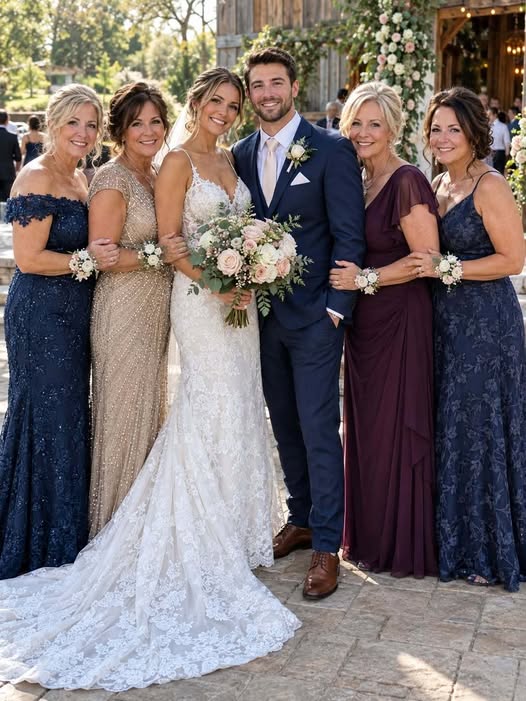
He also told me about the honeymoon. They had booked a trip to Greece months earlier. Grant had been looking forward to it, researching hotels and planning which islands they would visit. In March, Vanessa canceled the reservation without discussing it with him. She said they would stay at her mother’s lake house instead. When Grant questioned the change, she told him that was what they were doing now. He had been confused but hadn’t challenged her. The mother-son dance had also been removed from the schedule. Grant had selected “You Are My Sunshine” because it was the song I used to sing to him at bedtime. Margot had told the DJ to remove it in the interest of time. Meanwhile, Vanessa’s father-daughter dance remained on the program. Margot and her relatives had their matching blue outfits, their reserved seats, and their photographs. I had been asked to step aside, and Grant had allowed it because he didn’t know how to say no.
I listened without interrupting. I felt angry with Vanessa, but I also felt sad for my son. He had been repeating the same pattern I had lived with Richard. He was choosing silence because he believed disagreement would create trouble. I told him that he wasn’t his father. He looked at me, surprised. I explained that Richard had made every decision, but I had allowed him to do so because I thought keeping the peace was best for Grant. “You didn’t learn to be your father,” I said. “You learned to be me.” He stared at me. I told him about the night he had stood in the kitchen doorway while Richard criticized the price of his school shoes. I had wanted to stand up for myself, but I had sat down and agreed with Richard instead. Grant remembered. He said he had thought I was going to say something that night. I admitted that I had been. I had regretted not speaking ever since.
Grant began to cry. He said he didn’t want to become a man who let someone else decide what he could say, who he could call, or what he could do. He loved Vanessa, but he was frightened by how much of his life he had stopped controlling. I told him that loving someone didn’t mean surrendering his voice. I also told him that he needed to make decisions carefully, not in a burst of anger at his wedding. If he wanted to speak to Vanessa, he should do it honestly. If he wanted to make a toast, he should make it because it was the truth he wanted to share, not because he wanted to punish her. He sat quietly, thinking. After several minutes, he wiped his face and stood up. “I still want to say something,” he told me. I nodded. “Then say something true.”
We walked back into the ballroom together. Grant returned to the head table and picked up his champagne glass. He tapped it with a spoon again, and the room fell silent. This time, his voice was calm. He said he wanted to make a short toast. He began by saying that he had married the woman he loved and that he meant the vows he had spoken. Then he looked toward me, standing at the edge of the dance floor in my dusty-rose dress. “That woman over there,” he said, “is my mother. Joan Whitaker. She raised me, mostly alone, in a house where nobody ever raised their voice. She taught me to be kind, but she also taught me what happens when people stay quiet for too long.” The guests turned toward me. He said I had spent twenty years agreeing with his father, even when she had her own opinions. He told them that I had painted our kitchen yellow after Richard died because it was the color I had always loved. Then he said, “She’s my family. She should never have been made to feel otherwise.”
