Part 3: The Envelope and the Message I Had Refused to Read
When I returned to my room, I placed the bank documents on the small table and sat down without removing my coat. The statement was still open to the page showing the balance. Two hundred and eighteen thousand dollars. I had never imagined seeing such a figure beside my name. Yet the money was only part of the mystery. Ambrose’s letter suggested that he had made deliberate arrangements connected to our divorce, and the mention of the old card made me wonder how much I had misunderstood. I stood up and opened the wardrobe. Behind a stack of winter clothes was the cardboard box I had carried from our former home. It was dusty, and one corner had begun to collapse. I placed it on the floor and carefully removed the lid. Inside were photographs, old greeting cards, receipts, a few pieces of jewelry, and several documents I had not examined for years. Near the bottom was the small envelope I remembered. It was still sealed. I held it in my hands for a long time, remembering how I had pushed it away when it first arrived. Back then, I had believed that reading anything from Ambrose would only reopen a wound that was already difficult to bear. Now I wondered whether my refusal to read it had kept me from discovering something important about my own life.
I opened the card carefully. Inside, Ambrose had written a short message asking me not to mistake his silence for indifference. He said that he had arranged something to protect my financial future, but he had been unable to explain it without making the situation between us more painful. He also wrote that he hoped I would eventually understand that not everything he had done during the final months of our marriage was motivated by selfishness. At the bottom of the card was a reference number and the name of a financial institution. I immediately compared it with the bank information I had received that morning. The details appeared to be connected. The card also mentioned a lawyer who had helped prepare certain documents. Ambrose had included a telephone number, although it was now several years old. I wondered whether the lawyer was still practicing. The message did not answer my most important questions, but it confirmed that the account had been planned before the divorce was finalized. I sat on the edge of the bed and reread the card. My first reaction was anger. Why had Ambrose not simply explained everything when we were still married? Why had he allowed me to believe that I was leaving with nothing? Why had he sent money into an account that I could not access or even identify? I felt as though he had made a decision about my life without giving me the opportunity to understand it.
The following day, I contacted the bank again and asked for a more detailed explanation of the account arrangement. The representative reviewed the records and explained that the bank could provide certain information after completing additional identity and documentation checks. I also contacted the lawyer whose name appeared on the old card. Fortunately, the office was still operating, although the attorney who had handled the original arrangement had since retired. His former associate agreed to review the file and schedule a meeting. Before the appointment, I gathered every document I could find. I brought the divorce papers, the bank statement, the two letters from Ambrose, and the old card. I also prepared a list of questions. I wanted to know when the account had been opened, who had funded it, why I had not been informed, and whether the money belonged to me without restrictions. Most importantly, I wanted to understand why Ambrose had believed that I needed protection from something. Had he known about a financial problem I had never discovered? Was the money connected to an agreement we had made during the marriage? Or had he arranged it because he anticipated that I would struggle after the divorce? I did not want to accept a large financial gift without understanding its origin. After everything that had happened, I needed facts more than comforting promises.
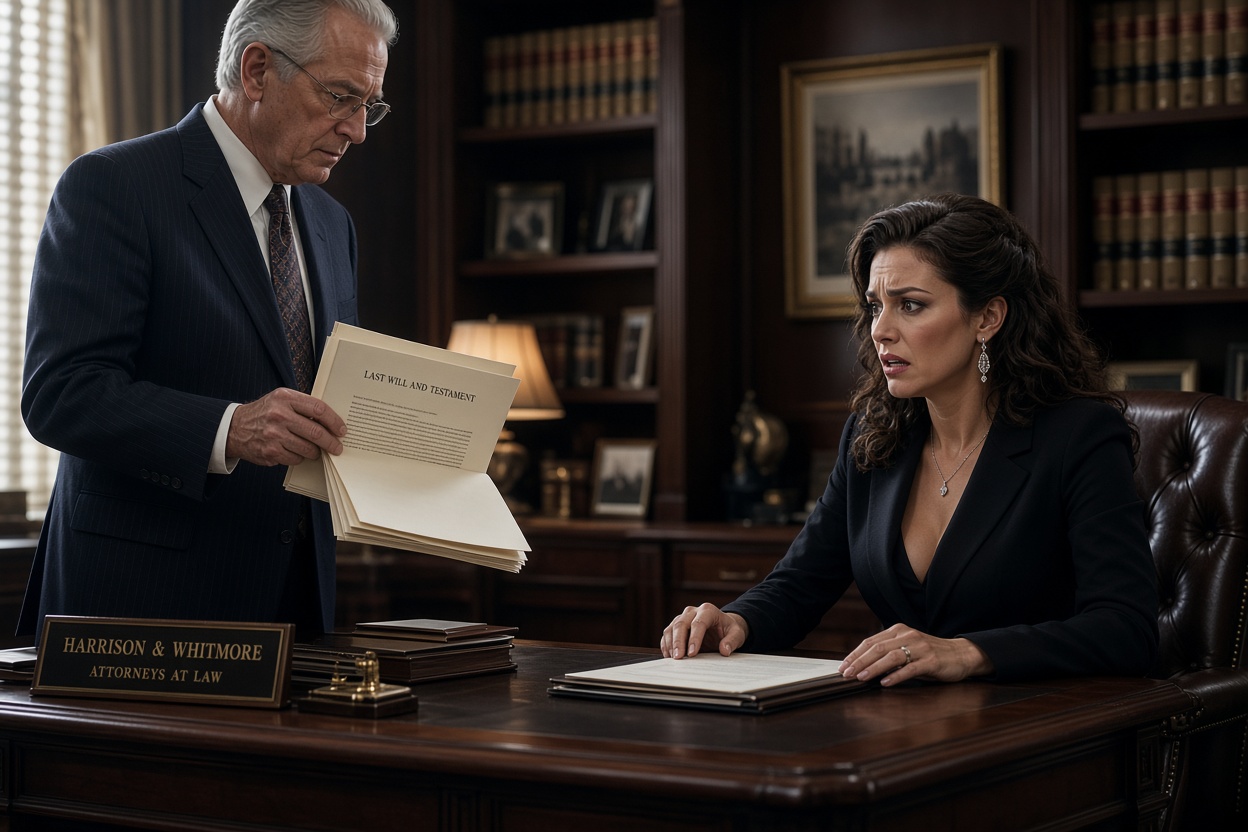
At the lawyer’s office, I was greeted by a woman named Elaine, who explained that she had worked with Ambrose on several financial matters. She remembered the arrangement but said that she needed to examine the complete file before discussing its details. She asked whether I had brought the bank statement and the original correspondence. I placed everything on her desk. As she reviewed the documents, her expression became increasingly serious. She explained that Ambrose had contacted the office shortly before the divorce was finalized. He had asked about creating a financial arrangement that would provide me with long-term support without requiring direct contact between us. Elaine said she had advised him to ensure that the arrangement was documented properly and that I would eventually receive clear information about the funds. However, she could not explain why the communication had apparently failed without reviewing the correspondence and instructions. She also wanted to determine whether the account was an ordinary deposit account, a trust-related arrangement, or another type of financial structure. I listened carefully, feeling both hopeful and frustrated. At least someone could confirm that Ambrose had intentionally planned the deposits. But I still did not understand why he had kept the arrangement secret for so long. Elaine promised to locate the archived file and arrange another meeting once she had reviewed it.
Before leaving, I asked Elaine whether Ambrose had ever explained why he wanted to provide me with financial support after our divorce. She paused and looked through one of the documents. Then she said that he had described it as a promise he had made to himself. He wanted to ensure that I would have a secure financial foundation, regardless of what happened between us. I asked why he had not simply given me the money directly. Elaine explained that his instructions had been more complicated and that the account had been structured to receive regular deposits over a fixed period. She also warned me that there might be important information concerning the source of the funds and the reason for the scheduled payments. I thanked her and left the office with more questions than answers. On the journey home, I thought about the way Ambrose had behaved during our final months together. I remembered arguments about money, his sudden withdrawal from conversations, and the way he seemed distracted whenever I asked about our financial future. At the time, I had assumed that he was preparing to leave me without any support. Perhaps I had misunderstood certain things, although that did not erase the pain of our separation. I returned to my little room, placed the letters beside the bank statement, and realized that the truth was beginning to emerge. Whatever Ambrose had hidden, it was connected to decisions he had made before we went our separate ways.
