The following morning, Patricia contacted the authorities and requested that the alleged occupancy agreement be examined as potential evidence of forgery. She also provided the divorce decree and the recorded deed to establish that Mark had no ownership interest in the property. Officer Yates contacted me later that afternoon and arranged another interview. He explained that Mark’s explanation had changed several times during the initial conversation. At first, Mark had described the move as a temporary arrangement. Then he claimed that I had agreed to share the property while certain financial matters were resolved. Finally, he suggested that our divorce agreement had created an ongoing obligation that required me to provide him with accommodation. None of those explanations matched the document he had presented.
The agreement specifically claimed that I had voluntarily granted him and Vanessa occupancy rights for twenty-four months. It also referred to an alleged financial contribution Mark had supposedly made toward the purchase of the property. I had received no such contribution. The entire purchase had been financed through my own accounts, and the bank records clearly showed where the money originated. Officer Yates asked me to provide a sample of my signature from around the date listed on the agreement. I supplied several documents, including the purchase paperwork, a bank authorization, and a signed statement prepared during the divorce proceedings.
The date on the agreement was May 28. That detail immediately caught my attention because I remembered exactly where I had been that day. I had traveled to Chicago to accompany my daughter Emily during a medical appointment at a hospital. I had stayed overnight and returned the following evening. The hospital records, hotel receipt, parking transaction, and several photographs from that trip could establish my location. I explained this to Patricia, who immediately requested copies of the relevant records. She said the information could become particularly important if investigators needed to establish that the document had been signed or notarized at a location where I had not been present. I also contacted the notary whose name appeared on the agreement. I didn’t know her personally, but her identification number and commission information were printed beneath the stamp. Patricia advised me not to confront her directly. Instead, we provided the information to the investigators so they could verify whether the notarization had been performed properly. Meanwhile, I received a message from Mark. It was short and written in the same confident tone he had used during our marriage. He said I was making a serious mistake by involving the police and that everything could be resolved if I agreed to speak with him privately. I showed the message to Patricia. She told me not to respond and advised me to preserve every communication.
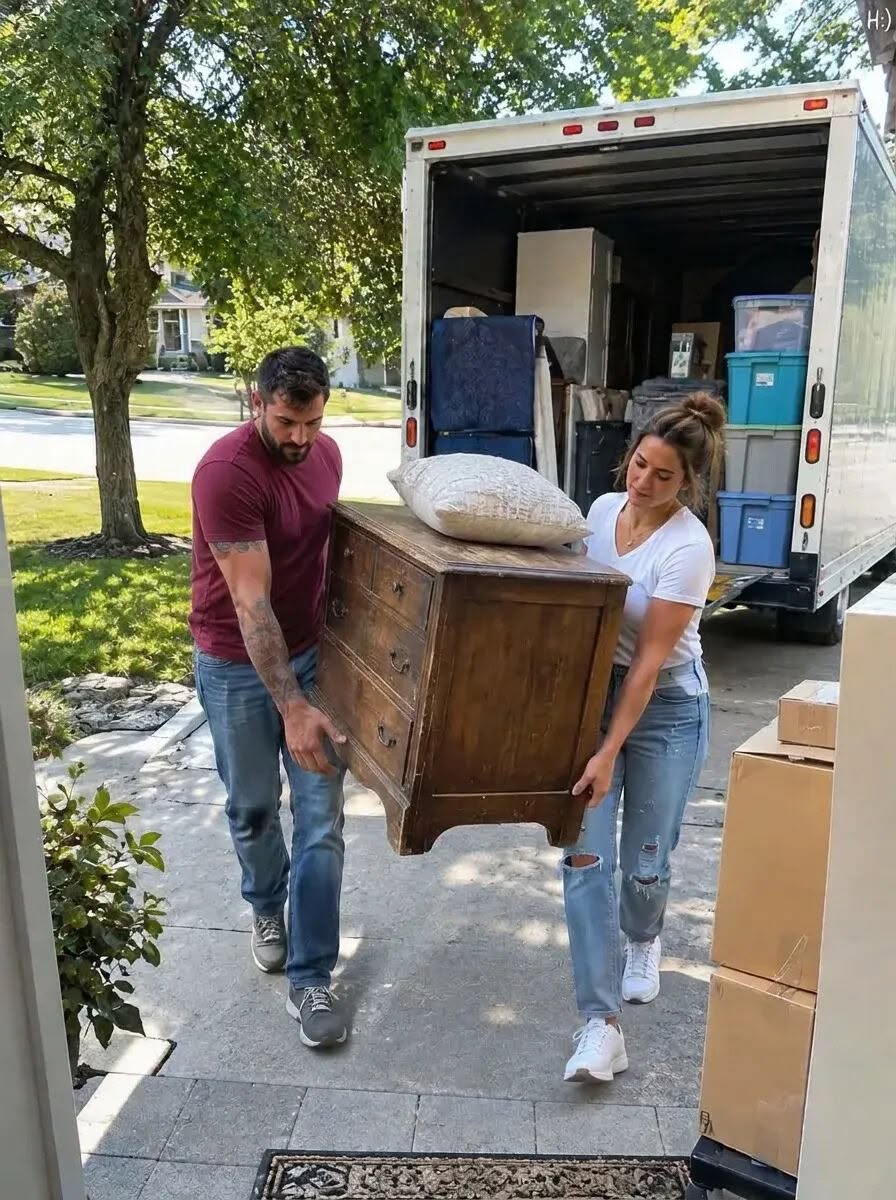
Over the next several days, investigators began examining the document and the circumstances surrounding the move. They interviewed the moving company employees, who confirmed that Mark had arranged the transportation and paid for the service. The workers said they had been told that the property belonged to Mark and his wife. They had no reason to suspect otherwise because Mark had provided an address and directed them where to unload the furniture. One employee remembered Vanessa showing him a photograph of the front entrance and explaining which rooms should receive certain items. Another recalled Mark telling the crew that the house was part of a financial arrangement with his former wife.
Investigators also reviewed the security footage and confirmed that Mark had entered through the side door using the correct keypad combination. The recording showed him entering without hesitation and immediately walking toward the kitchen. The footage also captured the black SUV passing the property several times. During one visit, the driver appeared to communicate with Mark before leaving. Investigators eventually identified the driver as Greg, Lynn’s husband. When questioned, Greg initially claimed he had simply been driving through the neighborhood. However, the investigators had already obtained information showing that he had communicated with Mark before the move.
The most important development came when investigators examined the digital files connected to the occupancy agreement. They discovered that the document had been created on Mark’s laptop several weeks before the attempted move. An earlier draft contained slightly different wording, including a paragraph suggesting that I had agreed to compensate Mark for years of financial contributions during our marriage. That paragraph had later been removed. Another file contained a scanned image of my signature taken from a document I had signed during the divorce proceedings. Investigators suspected that the image had been copied and inserted into the agreement.
The electronic properties of the document also provided information about when it had been created and modified. Messages recovered from Mark’s laptop showed that he had discussed the document with Vanessa and Greg. Some of the conversations referred to my inheritance and the possibility that I would eventually have to accept a shared financial arrangement. Other messages suggested that Mark believed occupying the property would strengthen his position if he later challenged the ownership. He appeared to think that once he and Vanessa established themselves inside the house, removing them would become more difficult. The plan had not been spontaneous. It had been prepared in advance.
Patricia explained that the discoveries could have consequences beyond the original trespassing complaint. If the signature had been fabricated and the notarization falsely represented, the document could constitute evidence of additional criminal conduct. The investigators also wanted to establish whether Vanessa had knowingly participated. At first, she claimed that she had believed Mark’s explanation. She said he had shown her the agreement and insisted that I had already approved their move. According to her, she thought the divorce had left certain financial matters unresolved and that the occupancy arrangement was part of a private settlement. However, investigators found messages that appeared inconsistent with her account. She had discussed the document’s date and the notary stamp before the move.
She had also asked Mark whether I would be able to challenge the agreement. His response suggested that he believed the paperwork would discourage me from involving the authorities. I found those conversations particularly disturbing because Vanessa had been standing beside him throughout the move, smiling and directing workers into rooms that belonged to me. She hadn’t simply arrived unexpectedly. She had participated in a plan designed to make the house appear as though it belonged to them. By the end of the first week of the investigation, I understood that the situation was far more deliberate than I had initially imagined. Mark hadn’t merely ignored my boundaries. He had attempted to manufacture legal authority to take control of my home.
