PART 1
My name is Georgia, and I am sixty-eight years old. I have been a widow for several years, and before retirement, I spent thirty-one years working behind the deli counter at Kroger. I spent most of my adult life serving other people, preparing meals, remembering their favorite foods, and making sure everyone had what they needed. I never minded working hard. In fact, I always believed that feeding people was one of the simplest ways to show love. My husband used to joke that I could turn an ordinary Tuesday into a holiday dinner if I had enough ingredients in the kitchen. After he passed away, cooking became even more important to me. It gave me something familiar to do, especially during the holidays when the house felt too quiet. Every Thanksgiving, I made homemade noodles, pumpkin pie, pecan pie, and soft dinner rolls. Then I loaded everything into my car and drove to my son Kyle’s house. It had become our family tradition, something I looked forward to all year. I loved seeing my grandchildren run through the house, hearing everyone talking at once, and watching the table fill with dishes. I never expected anyone to pay me for the food or thank me with anything more than a hug. I brought those meals because I wanted to. I believed family traditions were built through generosity, patience, and the willingness to show up for one another.
Kyle had married Brittany several years earlier, and I had tried to make her feel welcome from the beginning. She was organized, confident, and particular about how things should be done. At first, I thought those qualities were useful. She kept track of schedules, arranged family gatherings, and liked knowing exactly who was bringing what. I respected that, even when her approach seemed a little strict. Kyle had always been a quiet person, and I knew he preferred avoiding arguments. When Brittany made a decision, he usually agreed rather than risk upsetting her. I didn’t interfere with their marriage. I had learned long ago that adult children needed room to build their own households, and I wanted to be a supportive mother-in-law rather than someone who constantly offered opinions. Still, I noticed that the family gatherings gradually became more organized and less spontaneous. Brittany began sending messages about arrival times, seating arrangements, and what everyone was expected to contribute. I didn’t mind bringing food. In fact, I was happy to prepare the dishes everyone enjoyed. But I assumed that the purpose of those arrangements was to make the holiday easier for everybody, not to turn family dinner into something resembling a restaurant bill. Her parents, Ron and Debbie, were always invited, and they had become regular guests at Thanksgiving and Christmas. I never objected. They were Brittany’s family, and I wanted everyone to feel included. I simply assumed that we were all contributing in our own ways.
The Thanksgiving that changed everything began like every other holiday. I woke early, tied my apron around my waist, and started preparing the food. The homemade noodles took the most time because I still made them the way my mother had taught me. I mixed the dough, rolled it thin, cut it into strips, and left them to dry while I worked on the pies. The kitchen smelled of cinnamon, butter, and roasted pecans. I prepared the pumpkin pie first, then the pecan pie, carefully checking the crusts before placing them in the oven. Finally, I made the rolls and packed everything into containers so the food would stay warm during the drive. I was tired by the time I finished, but it was the good kind of tired that comes from doing something you enjoy. I imagined the grandchildren asking for extra pie and Kyle telling me that the noodles tasted just like the ones I used to make when he was a little boy. I arrived at his house carrying several containers, and Brittany greeted me at the door. She looked over the dishes and told me where to put everything. I noticed that Ron and Debbie were already seated comfortably in the living room. They hadn’t brought any food, but I didn’t think much of it. Perhaps they had been asked to arrive early to help with something else. I placed my pies on the counter, arranged the noodles and rolls, and went to greet my grandchildren. For a while, everything felt normal. People were laughing, the kitchen was busy, and the smell of turkey filled the house.
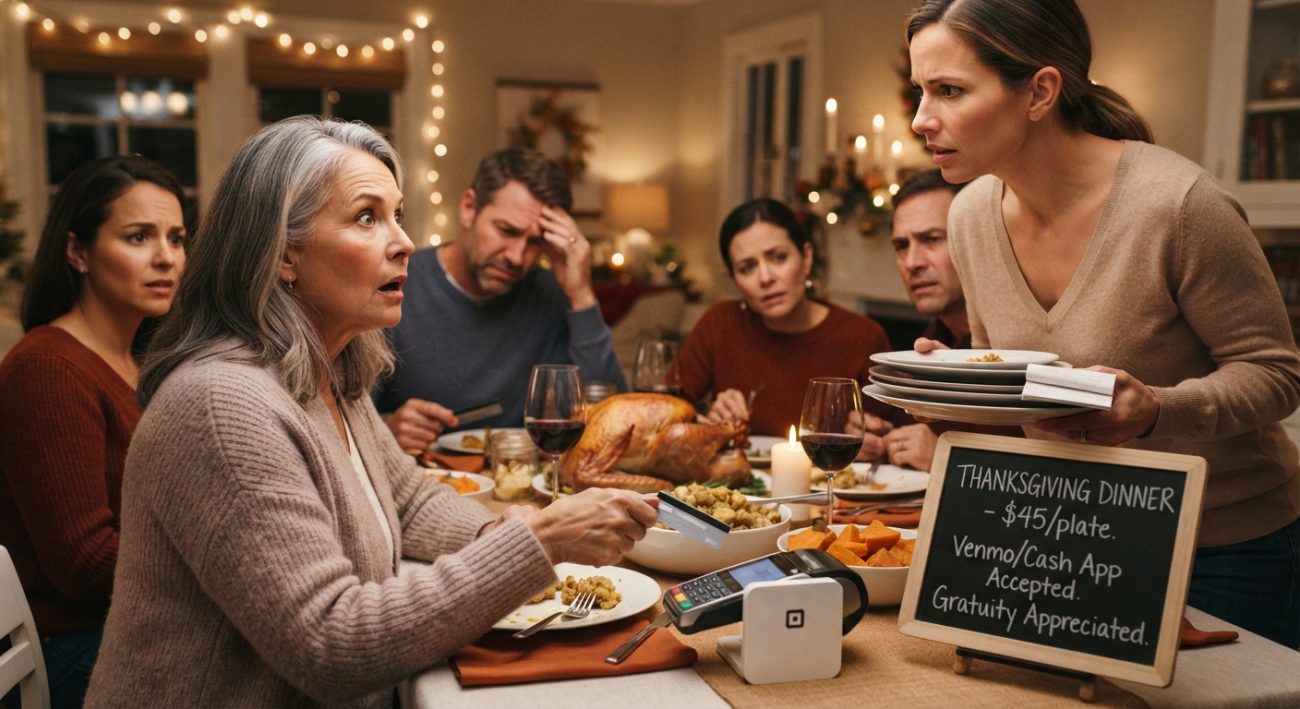
We gathered around the table when dinner was ready. Kyle said grace, thanking everyone for coming together and for the food. I bowed my head and listened, feeling grateful to be surrounded by family. Then, just after grace, Brittany reached into her pocket and placed a small index card beside my plate. At first, I thought it might contain a note about the dishes or something she wanted me to take home. But when I looked down, I saw three words written across the card: “Turkey, sides, dessert.” Beneath them was an amount: forty-five dollars. I stared at it for a moment, unsure whether I had misunderstood. Brittany leaned toward me and said that everybody needed to pay their fair share now. Her tone was calm, almost businesslike, as though she were handing me a receipt after a routine purchase. I looked around the table. Ron and Debbie had no cards beside their plates. Neither of them had been asked to pay anything. I had brought two homemade pies, noodles, and rolls, yet I was being charged for the turkey and sides as though I had simply arrived as a customer. I turned toward Kyle, waiting for him to say something. He was looking down at his mashed potatoes. He didn’t meet my eyes. I felt a knot forming in my stomach, but I refused to let the moment turn into a public argument. I had spent too many years working with difficult customers to let someone see me lose my composure over a piece of paper. I folded the card, placed it beside my plate, and continued eating.
