PART 7 — FORTY-TWO PINK BALLOONS
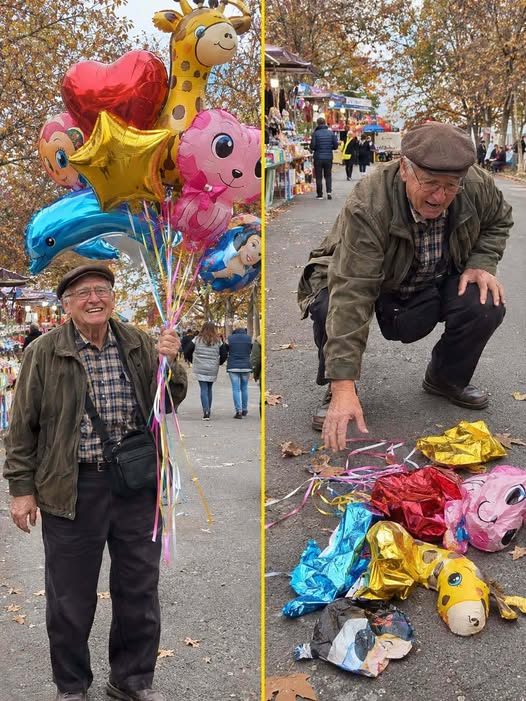
The boys began working with me the following Saturday. They arrived early, some of them looking as though they had never willingly gotten out of bed before sunrise. They were terrible at tying balloons. Strings slipped through their fingers, knots came undone, and more than a few balloons floated away before they could be attached to the cart. Moose lost eleven in one morning. I told him exactly how much that mistake had cost, and he offered to pay me back. He worked at Dillons with Brayden’s mother, so he had a way to earn the money. He paid every penny. By April, the boys had become much better. They learned how to fill the balloons without overdoing it, how to tie a secure knot, and how to speak politely to customers. The work was repetitive, but it gave them time to think. They began to understand that each balloon represented time, money, and effort. They also began to understand that the old man they had mocked was someone who loved a little girl enough to work every spare hour he could.
By May, the cart had become something the community recognized. Cole painted a large sign in bright colors that read, “SADIE’S BALLOONS. $5 EACH. EVERY DOLLAR GOES TO KICKING CANCER’S BUTT.” People stopped to take photographs, and families returned week after week. Jaxon’s father came to the market one Saturday and watched his son carefully tie a balloon for a little girl in a wheelchair. He didn’t say much, but the following Monday a local business association contacted me with an offer to sponsor a permanent booth at the market. The sponsorship included a tent, a table, and a sign near the main entrance. Jaxon’s father had helped arrange it. I thanked him, and he nodded. Sometimes people don’t know how to express regret with words. Sometimes they try to show it by doing something useful.
Eli continued coming to the market too. He brought his trumpet and played Louis Armstrong songs beside the cart. “What a Wonderful World” became a favorite. People dropped money into his trumpet case, and he added every dollar to Sadie’s fund. The fundraising page continued growing until it had raised more than $160,000 from over five thousand donors. The money came from across the United States and from other countries. A man in Japan wrote that he was also a grandfather and that the story had made him cry. The donations helped cover Sadie’s treatment, hospital visits, spinal taps, and the expenses that had once seemed impossible. I put the money that wasn’t needed immediately into a trust for her future and her education. I also gave Mrs. Ruiz five thousand dollars to thank her for everything she had done. She tried to refuse it, but I insisted. She had helped raise Sadie when I was at work, comforted her when she was frightened, and cared for her as though she were family. I wanted her kindness to be recognized.
Months later, Sadie had another important appointment at Wesley Children’s Hospital. I sat in the same waiting room where I had once been told that my daughter, son-in-law, and grandson were gone. Mrs. Ruiz sat beside me and held my hand. When Dr. Mehta finally came out, she was smiling. She told me that Sadie’s tests showed no detectable leukemia. Sadie was in remission. She still needed maintenance treatment, medication, and regular checkups, but the news was better than I had dared to hope. I covered my face and cried. Mrs. Ruiz wrapped her arms around me. I thought about the hospital nurse placing Sadie in my arms four years earlier, about the long nights, the medicines, the appointments, and the little jelly jar. I thought about the day the balloons were destroyed and the fear that I might not be able to afford the next procedure. This time, I was crying because there was hope. On October 21, Sadie went to the cancer center’s brass bell and rang it to mark the end of a major phase of treatment. She wore her purple sneakers and a pink tutu, and her dark brown curls were beginning to grow back. Around her stood Mrs. Ruiz, Dr. Mehta, Eli, the four boys, their families, Dr. Price, Reggie, and the nurses who had cared for her. Each person held a balloon. There were forty-two pink balloons, the same number I had filled on the Saturday when the boys destroyed my cart. Sadie asked me to ring the bell with her. I placed my hand over hers, and together we pulled the rope. The bell rang down the hospital hallway, and everyone cheered.
I still sell balloons every Saturday. We don’t need the money the way we once did, but I enjoy the work. I like seeing children’s faces brighten when they choose a color. I like watching the boys arrive at 5:52 a.m. with their gas-station coffees, ready to set up the cart. They still help, and they still remember the rules. Brayden has grown taller, his grades have improved, and he has started working through his grief with a counselor. His mother changed her schedule so she could be home more often. The boys have learned that making amends is not a single apology; it is a choice you keep making through your actions. One Saturday, another group of teenagers walked past the cart and recognized me from the video that had circulated online. Brayden stepped forward, holding a bunch of pink balloons. He didn’t threaten them or insult them. He simply offered them a chance to buy one and support a child with cancer. One of the teenagers pulled out five dollars and accepted a balloon. Brayden tied it carefully with a double knot, the way I had taught him. Then he reached into his pocket, took out a quarter, flipped it into the air, and caught it. It was the quarter Sadie had given him in the principal’s office. He carried it as a reminder of what he had done and what he had been given the chance to become. He smiled and said, “Brave.” I handed him the next balloon. And as I watched the colors rise above the market, I understood something I had learned through grief, fear, and an unexpected act of kindness: sometimes the people who break something can help you rebuild it, if they are willing to show up and do the work.
