The nurse told Laura that Raymond had been making the same unusual statement whenever he came close to waking up. His words were often unclear, and he sometimes drifted back into unconsciousness before anyone could understand him. But one phrase had repeated several times. “Three knocks,” the nurse explained. “He keeps saying he has to knock three times.” Laura immediately understood. Raymond had been thinking about the promise he made to Ashley before leaving home. He had told her to wait for three knocks before opening the door, and even while unconscious, his mind seemed to be trying to complete that journey. Laura leaned closer to him. “Raymond,” she said gently, “Ashley is safe. She’s receiving the treatment she needs. You don’t have to worry about getting home right now.” For a few seconds, nothing happened. Then his fingers moved slightly beneath the blanket. The monitor continued its steady rhythm. Laura repeated Ashley’s name. Raymond’s eyelids trembled, and his eyes opened a little. He seemed confused by the room and the people around him. His lips moved, but no sound came out at first. Laura leaned closer, trying to hear him. Finally, he managed to whisper one word. “Medicine.”
Laura felt tears gathering in her eyes. She assured him that the medicine had been found and that Ashley was receiving proper care. She told him that the pharmacist had helped him and that the groceries had been recovered. Raymond appeared to understand only part of what she said. He looked toward the doorway, as though expecting to see his daughter standing there. The nurse asked him to remain still and explained that he had been seriously injured. Raymond tried to speak again, but his voice was weak. He asked how long he had been in the hospital. When Laura told him that four days had passed, tears rolled down his face. He began moving his hands anxiously, and the nurse gently encouraged him to rest. Laura explained that Ashley had been alone at home but had called emergency services when she became frightened and sick. She told him that she was receiving treatment and had been asking about him. Raymond closed his eyes, and another tear slipped down his cheek. He appeared overwhelmed by the thought of his little girl waiting for him. “I told her thirty minutes,” he whispered. Laura reassured him that Ashley knew he loved her and that nobody blamed him for the accident. She promised that she would make sure he had the opportunity to see his daughter when the doctors considered it safe.
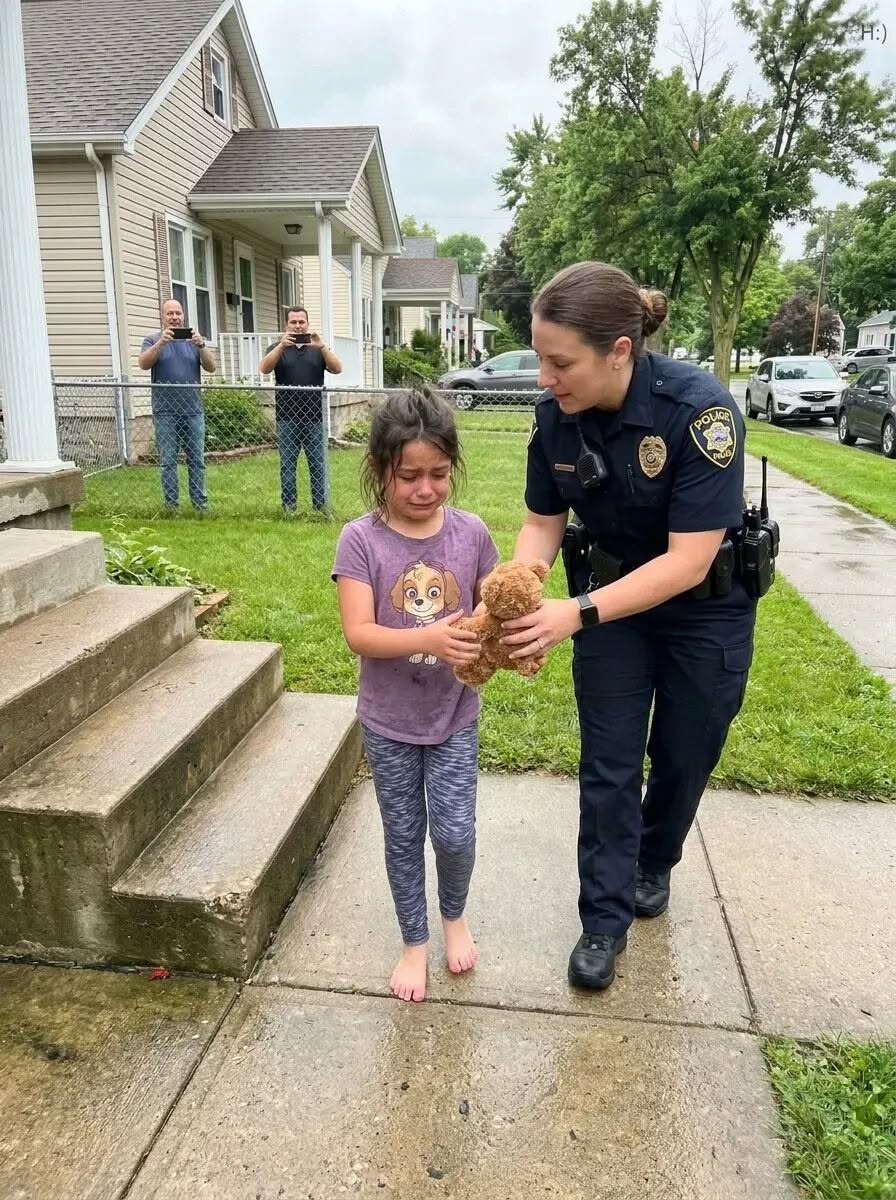
Meanwhile, outside the hospital, the story had taken on a life of its own. Videos recorded by neighbors during Ashley’s rescue had been shared online. In some clips, the child could be seen being carried toward the ambulance while holding her stuffed puppy. The original posts included accusations that Raymond had abandoned her for days. People who knew nothing about the family’s circumstances began commenting, demanding that he be arrested and that Ashley be placed in foster care. Some claimed that the condition of the house proved he had neglected his daughter. Others accused the authorities of protecting an irresponsible parent. The video spread quickly, reaching thousands of viewers. The truth was far more complicated than the rumors suggested. Raymond had been working night shifts, struggling to keep his daughter’s medical treatment available, and trying to provide food with almost no money. He had sold his wedding ring to buy her medication. Then he had been struck by a vehicle while walking home through the rain. He had not chosen to disappear. He had been lying unconscious in a hospital bed while his daughter waited for him. When Laura learned how widely the accusations had spread, she contacted the department’s public information officer and requested that the verified facts be shared.
The police eventually released a statement confirming that Raymond had been identified as the pedestrian involved in Thursday night’s collision. The statement explained that he had been transported to Riverside General Hospital with serious injuries and had remained unconscious since the accident. Investigators had located the grocery and pharmacy items he had been carrying and confirmed that he had purchased medication for his daughter shortly before the collision. The department also clarified that Ashley had been taken to the hospital after calling 911 and that she was receiving appropriate care. The statement did not disclose unnecessary medical details, but it made one thing clear: Raymond had not abandoned his child. He had been injured while trying to return home with the supplies she needed. The reaction online changed almost immediately. Many people deleted their earlier comments. Others apologized publicly and admitted that they had judged the family without knowing what had happened. Some expressed anger that neighbors had recorded the rescue instead of first asking whether the child needed assistance. The woman who had filmed Ashley being carried outside watched the official statement several times. She had been among the loudest voices accusing Raymond of neglect. Now she realized that the story she had helped spread was deeply unfair.
Laura later visited the neighborhood to speak with several residents who had been present during the rescue. She wanted to understand whether anyone had noticed Raymond walking home that night or had seen the accident. She also wanted to make sure Ashley would have support when she eventually returned home. The neighbor who had criticized Raymond most loudly approached her with a worried expression. When Laura explained what had happened, the woman began crying. She said she had seen Raymond struggling financially but had assumed he was careless with money. She admitted that she had never offered to help because she believed the family was simply making poor choices. Laura did not lecture her, but she explained that the little girl had spent four days waiting for her father and that the family had been facing difficulties that were not obvious from the outside. The neighbor looked toward Raymond’s house and quietly said that she wished she had done something sooner. Laura reminded her that the most important thing now was to offer practical support rather than remain trapped in guilt. For the first time, several residents began discussing ways to help the family. Some offered meals, others offered transportation, and one person volunteered to help Raymond repair his car. The neighborhood that had once judged him was beginning to recognize how much he had been carrying alone.
