PART 2 – THE DOCUMENTS HE THOUGHT I WOULD NEVER FIND
The first thing I did after Scott left for work the following morning was call Rebecca Hayes. I had met her several days earlier, after finding a collection of financial documents tucked inside a folder in Scott’s home office. At the time, I hadn’t understood the full significance of what I was looking at. There were account statements, property records, copies of loan applications, and several pages containing transactions I couldn’t explain. What frightened me most was that some of the documents appeared to have been prepared without my knowledge. Rebecca had advised me not to confront Scott until we understood exactly what the paperwork meant. She also told me to preserve everything, including electronic records and copies of documents that might later become important. Now, after seeing the divorce papers he had presented so confidently, I knew I needed her guidance more than ever. When she answered, I explained that Scott had given me divorce papers and believed I had accepted his proposed settlement. There was a brief silence before she asked, “Did you sign anything?” I told her I had signed the marked pages. Her voice became serious. “Then I need to see precisely what you signed. Bring me every page, including the envelope and any attachments. Don’t assume his interpretation of those signatures is legally correct.”
I spent the next several hours collecting the paperwork. I made copies of everything and organized the documents by date. The first group concerned our family home, which Scott had listed as an asset he intended to retain. The second contained statements relating to our joint savings. The third involved several financial transfers that had initially seemed ordinary but now appeared suspicious. I remembered noticing that money had moved between accounts at unusual times during the previous year. When I asked Scott about it, he had told me he was reorganizing our finances to get better interest rates. I had trusted him because he handled most of our banking. I had never imagined that he might be using that responsibility to create a financial advantage for himself. One statement showed a transfer that was considerably larger than our usual household expenses. Another document referenced an account I didn’t recognize. I wrote down the dates and amounts, then compared them with the financial schedules attached to the divorce papers. Several figures did not match. I began to understand why Scott had been so eager for me to sign without asking questions. He wanted the paperwork completed before I had the opportunity to examine the details.
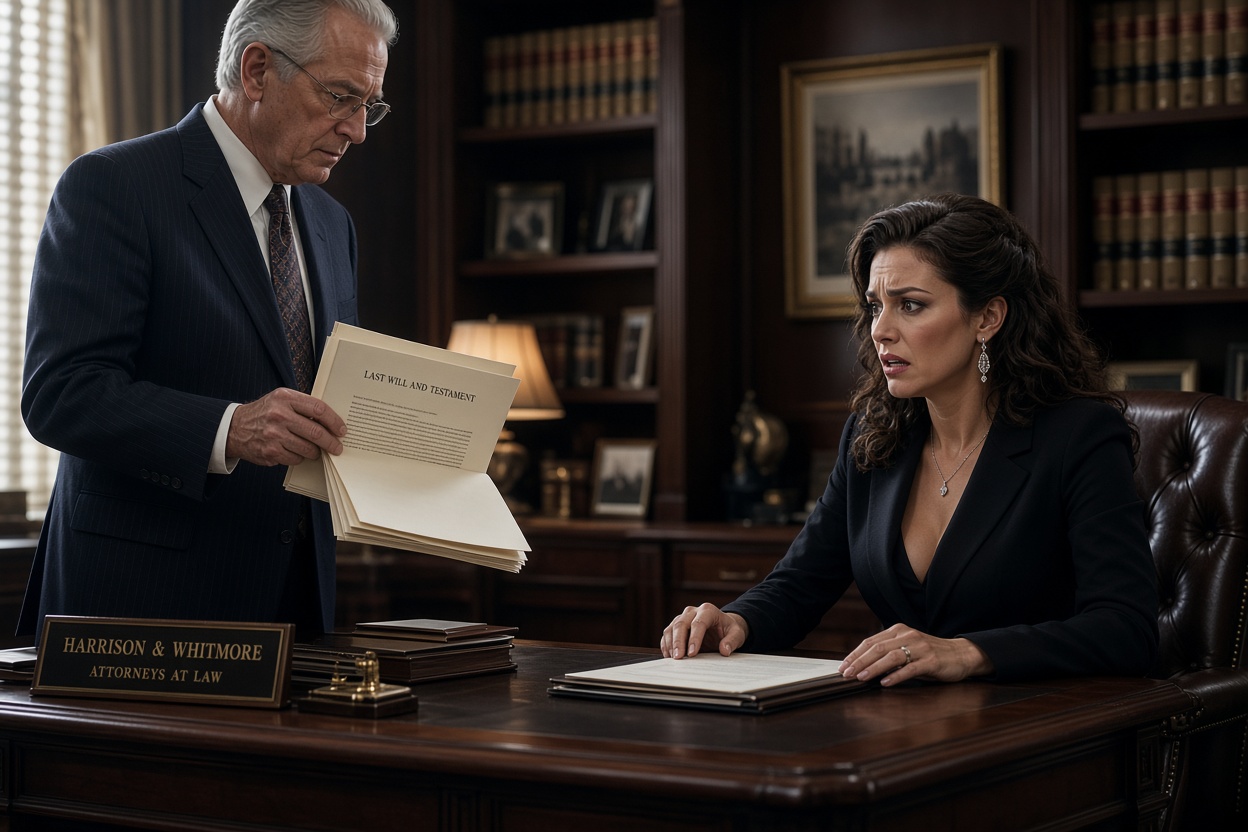
When I arrived at Rebecca’s office, she greeted me warmly and immediately began reviewing the documents. She read the divorce papers first, then examined the financial records I had brought. Occasionally, she made notes or asked me to clarify a date. After nearly an hour, she leaned back and looked at me carefully. “There are several issues here that need investigating,” she said. “But I want you to understand something important. Signing a document does not necessarily mean every claim contained in it is automatically valid or that you have surrendered every legal right. We need to establish what these papers actually are, what they are intended to accomplish, and whether the financial information is accurate.” I asked whether Scott could simply take the house, the savings, and the cars because I had signed his documents. She explained that property division and custody arrangements were subject to applicable law and court procedures. Neither spouse could simply declare ownership of everything and make it legally binding through intimidation. Her answer relieved me, but it also made me realize how deliberately Scott had presented his demands as inevitable. He wanted me to believe that resisting him would be pointless.
Rebecca then asked about our children. She wanted to know their ages, their school arrangements, their relationship with both parents, and how Scott had discussed custody. I explained that he had spoken about them as though he expected to determine where they lived and how often I would see them. He had not asked what would be best for them. He had simply included his preferred arrangement in the papers. Rebecca shook her head. “Children are not property to be divided. Their welfare must be considered separately from financial negotiations.” I felt tears forming, but I held them back. My greatest fear wasn’t losing the house or the cars. It was the possibility that Scott would use the divorce to make our children feel caught between us. Rebecca assured me that we would approach the matter carefully and avoid involving them in adult disputes. She also advised me not to discuss the financial investigation with Scott until we had established a clear legal strategy. I left her office with a list of documents to gather and a much clearer understanding of what needed to happen next.
That evening, Scott came home carrying a bottle of wine. He seemed unusually cheerful and announced that he had spoken to his lawyer. According to him, everything was moving forward exactly as planned. He asked whether I had told anyone about the divorce, and I replied that I had only spoken to someone who could help me understand the paperwork. His expression changed immediately. “Who?” I told him I wasn’t prepared to discuss that. He placed the bottle on the counter and stared at me. “I hope you haven’t done something foolish. I already have legal representation, and you agreed to the arrangement.” I looked at him calmly. “I agreed to read your papers. That doesn’t mean I agreed with every statement in them.” He laughed and told me I was making things unnecessarily complicated. I didn’t argue. Instead, I picked up the children’s school bags and went to help them with their homework. Behind me, I heard him muttering that I would eventually understand how much better his offer was than anything I could obtain through a lawyer. For the first time, his confidence sounded less like strength and more like fear that I might discover something he had worked very hard to conceal.
