PART 7
On Saturday morning, Frank and I were drinking coffee at the kitchen table when someone knocked at the front door. We looked at each other. In eight months, Denise had never knocked on our door before. I got up and opened it. She stood on the step wearing jeans, a sweatshirt, and gardening shoes. In one hand, she held the trowel and the long-handled cultivator. In the other, she held an envelope. The tools had been cleaned. The dirt was gone, and she had tried to remove the rust from the trowel. The green tape Frank had wrapped around the cultivator was still there, faded and peeling at one end. I recognized it immediately. It was strange how much seeing that little piece of tape meant to me. The tool was not expensive, and I could have purchased another one. But Frank had repaired it for me, and I had used it for years. It belonged in our garage. Denise handed me the tools and then offered me the envelope. I counted the money while she stood there. In the past, I would have taken it without looking and said she did not need to go to so much trouble. But I counted it. There were three twenty-dollar bills, a five, three ones, two quarters, a dime, and four pennies. It came to exactly sixty-eight dollars and forty-nine cents. She had even included the change. “Thank you, Denise,” I said. She nodded and replied, “Sure.” Neither of us mentioned the weather.
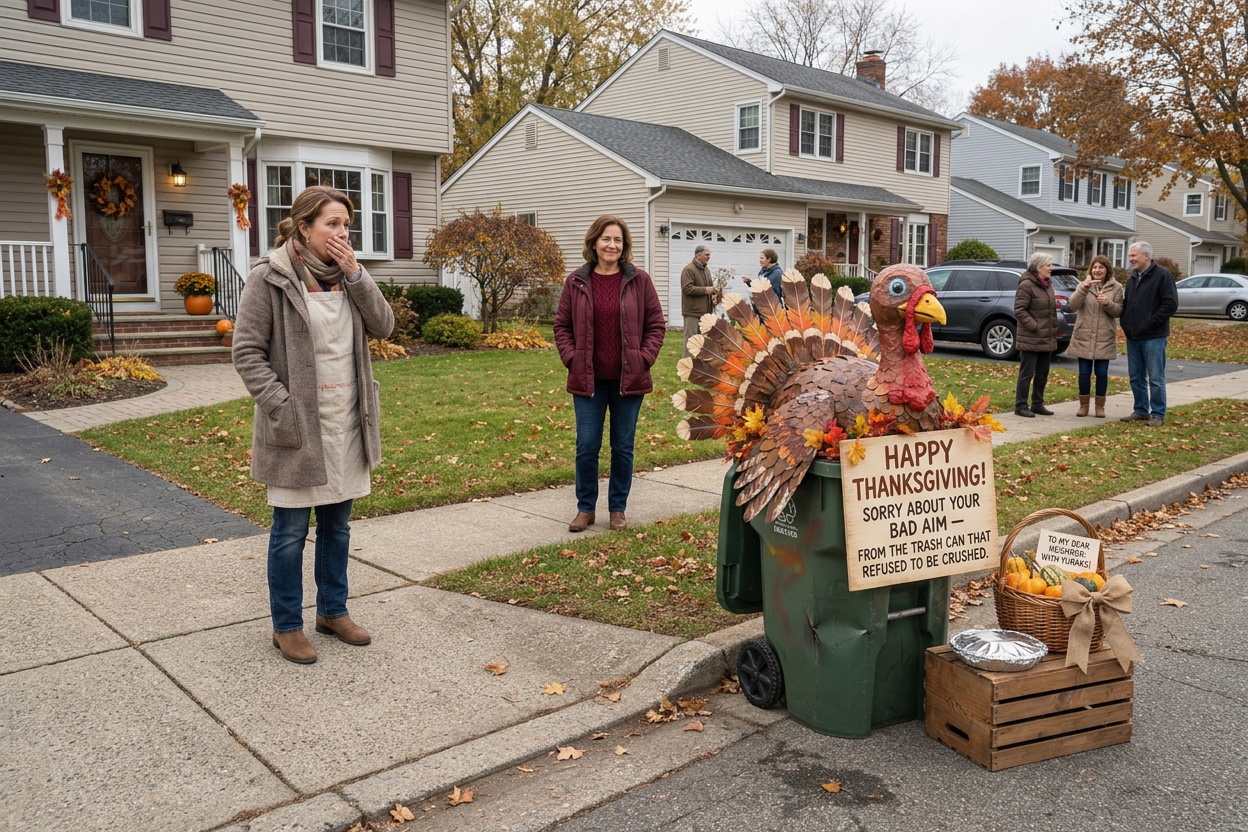
Denise then carried away the melted garbage can and the bag of burned trash. She had to make two trips. The bag was heavy, and the damaged can was awkward because one wheel had melted near the axle. As she dragged it toward the street, the bad wheel caught on the small raised edge where our driveway met the road. The container tipped sideways and nearly fell. I immediately wanted to help. My hand reached for the door, and I stepped toward the porch. I could have walked down and lifted the other side. It would have been easy. I had spent most of my life helping people without thinking twice. But I stopped. The agreement was that Denise would remove the damaged can, and I did not need to take responsibility for every difficult moment she encountered. I watched her back up, turn the container, and try again. This time, she managed to pull it over the raised edge. She dragged it all the way to the end of her driveway and returned for the bag. Then I closed our front door. Frank had been standing behind me. He knew I had wanted to help, and he said so. I admitted that I had. He asked whether I was glad I had stayed inside. I said I thought I was. He kissed my forehead and told me he was glad I had not gone out. Then he mentioned that my mother probably would have helped her. I agreed. My mother had always been generous, but I was beginning to understand that generosity should be a choice, not an obligation.
That afternoon, I returned the cultivator to its place in the garage. I hung it on the same nail where Frank had originally placed it, with the green tape facing outward. Then I opened the garage door and left it open. I spent the afternoon raking the last leaves from the flower beds, sweeping the front walk, and wrapping the roses in burlap for the winter. Frank brought his old kitchen chair outside, sat near the garage entrance, and watched me work with a cup of coffee. It reminded me of the afternoons when Ellen used to visit. She would sit in that same chair, talk about her garden, and drink iced tea while I worked. Frank looked around the open garage and said it was nice to have it open again. I agreed. For months, I had been closing that door because I was afraid Denise might enter and take something. Now, I could leave it open because I had finally made my boundaries clear. The garage was still my garage. The tools were still my tools. And I did not have to hide everything away to protect it. I felt as though I had reclaimed a small part of my home that I had gradually surrendered without realizing it.
A week later, Denise knocked again. It was Sunday afternoon, and I was making soup while Frank slept in his chair with the football game playing on television. I had spent the morning working in the garage, and the door was still open. Denise stood on the front step wearing gardening gloves. She greeted me and asked whether she could borrow my pruning shears. I knew exactly where they were. I had used them earlier that morning and left them on a folded rag beside the workbench. They were clean, sharp, and ready for the next round of work in my garden. I could have lent them to her. The old response came immediately to mind: Of course, dear. They’re on the workbench. Just bring them back when you’re finished. I almost said it. But then I imagined spending the rest of the afternoon wondering when she would return them, whether she would remember where she had put them, and whether I would have to go next door to ask for them. I had planned to trim my roses before the hard freeze, so I simply told her I was using the shears that afternoon. It was true. But even if I had not planned to use them, I was allowed to say no. They belonged to me, and the decision belonged to me too.
Denise nodded. She did not roll her eyes, complain, or accuse me of being stingy. She simply said she understood and wished me a good afternoon. Then she walked home. Through her kitchen window, I could see two little coffee cans sitting on the windowsill. Green shoots had begun growing inside them. They were the rose cuttings from my mother’s garden. I stood at the door for another moment, then returned to the kitchen. I stirred the soup, turned down the heat, and went to wake Frank for the second half of the football game. He grumbled when I touched his shoulder, so I put a blanket over his knees and left him to watch. Later, I put on my coat and gardening gloves and went outside to trim the roses. My pruning shears were exactly where I had left them. I picked them up, walked to the flower bed, and began working. The street was quiet, the garage remained open, and the roses stood beneath the windows, waiting for spring. I had not become a different person. I was still the woman who baked banana bread for new neighbors, brought casseroles when someone was sick, and liked helping whenever she could. But I had finally learned something important: being kind did not mean allowing people to ignore my wishes. I could share when I wanted to, refuse when I needed to, and still be a good neighbor. The answer was mine to give.
